A few simple steps can make a big difference in the accuracy of your blood pressure readings.
Your blood pressure naturally changes throughout the day based on your activity, meals, medications, stress, sleep, and even how you're sitting. That's why a single high reading doesn't always mean your blood pressure is out of control.
Measuring your blood pressure under consistent conditions gives your healthcare provider a much clearer picture of your heart health and helps prevent unnecessary medication changes.
Before You Measure
For the most accurate reading:
- Rest quietly for at least 5 minutes.
- Sit with your back supported, feet flat on the floor, and legs uncrossed.
- Rest your arm on a table so the cuff is at heart level.
- Stay still and avoid talking or using your phone.
- Take 3 readings, one minute apart, and record the average.
Use the Right Equipment
Using the correct cuff is one of the most important factors for an accurate reading.
- Choose the correct cuff size for your arm (a cuff that's too small can falsely increase readings by 2–10 mmHg or more).
- Place the cuff directly on bare skin, not over clothing.
- Use an upper-arm blood pressure monitor rather than a wrist monitor whenever possible.
- If you question your monitor's accuracy, bring it to your healthcare provider's office to compare it with a manual blood pressure measurement.
When Should You Measure?
For the most consistent results:
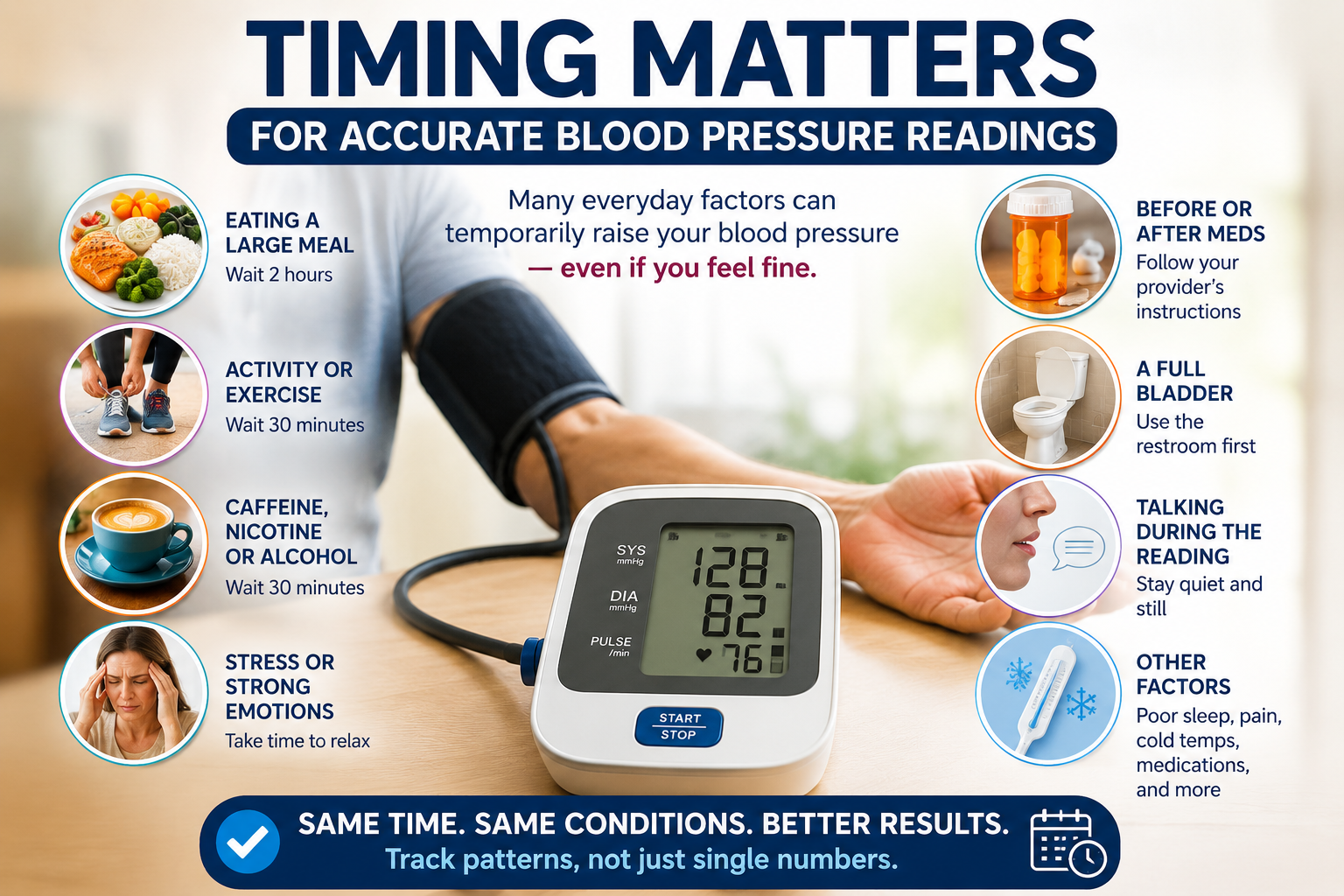
- Before eating, or at least 2 hours after a large meal.
- At least 30 minutes after exercise or strenuous activity.
- Avoid caffeine, nicotine, smoking/vaping, and alcohol for at least 30 minutes before measuring.
- Use the restroom first, since a full bladder can temporarily raise blood pressure.
- Try to measure around the same time each day and use the same arm each time.
What About Blood Pressure Medication?
The timing depends on what your healthcare provider wants to evaluate.
- Before taking your morning medication if they want to see your highest blood pressure before treatment.
- About 2 hours after taking your medication if they want to see how well it's working.
Always follow the monitoring schedule recommended by your healthcare provider.
Take Three Readings and Average Them
The American Heart Association recommends that the most accurate measurement is:
- After resting in a chair for around 5 minutes, with feet flat on the floor, and legs and arms uncrossed.
- Taken three times, with each reading spaced 1 minute apart.
- The reading that you use is the average of all three readings.

Other Factors that Exaggerate Blood Pressure Results
Things that cause higher-than-normal readings:
- Stress: Stress or nervousness before or during a measurement may raise cortisol levels, and cause a rise in blood pressure. Take some deep breaths before and during the measurement to lower stress.
- Salty foods: May cause higher readings for a few days afterward.
- A full bladder: This can add up to 10 to 15 points. Use the restroom before getting your blood pressure to get a more accurate reading.
- Talking: Speaking during the measurement may raise blood pressure by 10 to 15 points. Try to avoid talking while taking a measurement.
- Being cold: Shivering raises body activity and thus blood pressure. If you can’t control the temperature in the room, then make a note that this may have been a factor contributing to the high reading.
- Alcohol, caffeine and tobacco: Avoid consuming these 30 minutes before taking a reading, as they will cause a higher than normal blood pressure.
- Exercise: Blood pressure may be temporarily higher after exercise. After exercise, please rest for 30 minutes before checking blood pressure.
Things that cause lower-than-normal readings:
- Eating a large meal: digesting food actually lowers blood pressure: Take your blood pressure in the morning before eating anything, OR 30 minutes or more after your last bite of food.
- Dehydration: this may cause lower blood pressure until you correct it. If you’ve just come from the sauna, hot tub, or jacuzzi, or if you’ve been sweating a lot, this can cause a LOW blood pressure. Drink some water, eat some fresh fruits and vegetables, and recheck in an hour.
Questioning Device Accuracy
- It is never recommended to compare one digital blood pressure machine to another.
- Avoid using a wrist blood pressure monitor. There are too many variables that may affect readings and make them inconsistent and unreliable.
- The American Heart association recommends that to ensure accuracy of your blood pressure monitor, you should compare it against the doctor manually reading your blood pressure using a sphygmomanometer.
- To do this test, take your blood pressure monitor to the doctor’s office and do a side-by-side comparison, with the readings spaced 1 minute apart.
- Blood pressure monitors are typically calibrated from the factory. Industry standards note that a blood pressure monitor will gradually lose it’s accuracy over time. Replace your blood pressure monitor every 2 years.
- If you drop your blood pressure monitor, this may affect accuracy, even once. Try to keep your blood pressure monitor in a safe place where it will not be moved or transported too much.
Please contact you Care Team if you have any further questions!