Now that you know what forever chemicals are — and where they’ve been hiding — here’s the good news: you probably cannot eliminate PFAS exposure completely, but you can lower it in meaningful ways. The goal is to not panic. The goal is fewer routine exposures from the products you use every week.
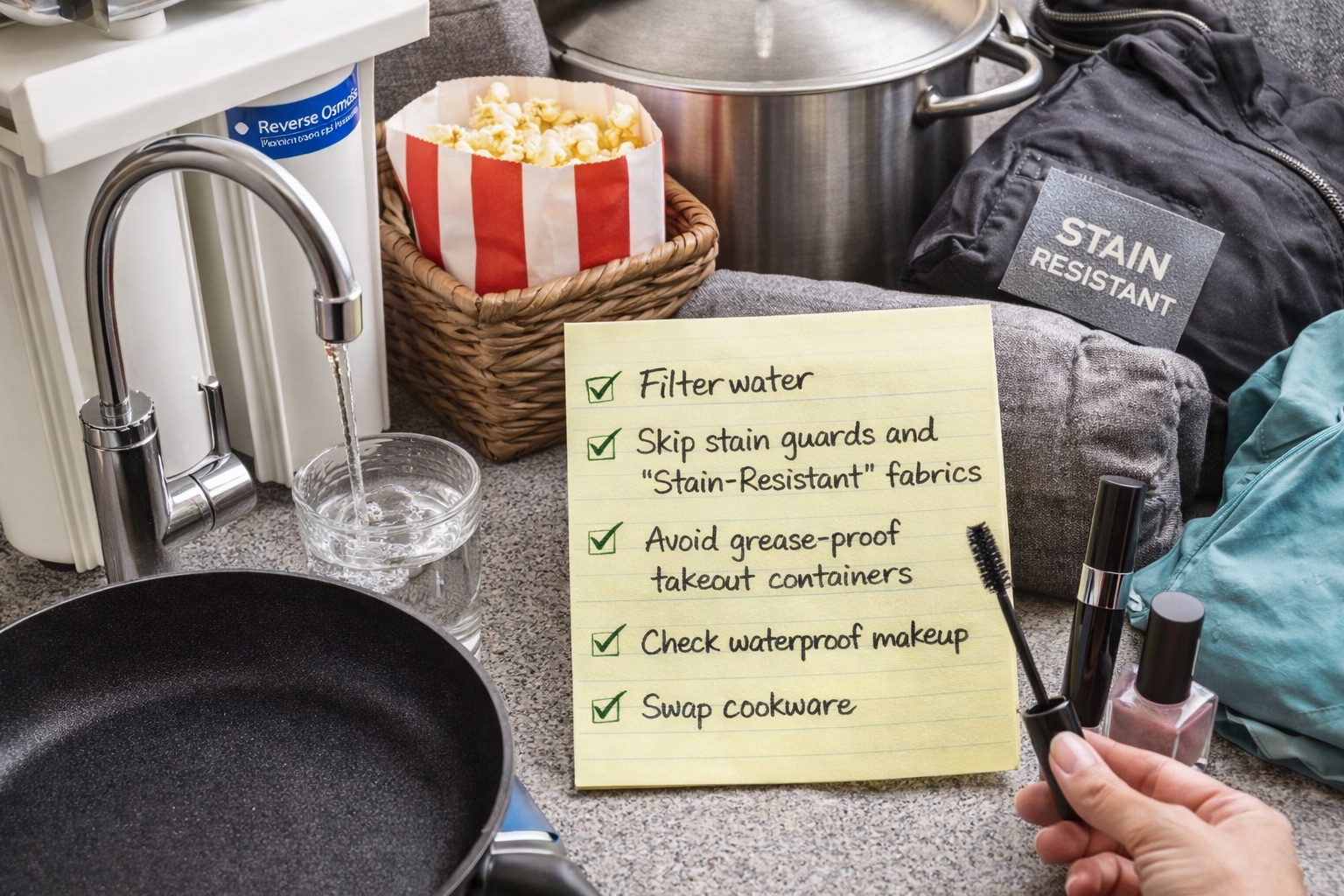
5 simple ways to lower your exposure
1) Filter your water
For many people, drinking water is one of the most important exposure routes. EPA now has national drinking-water standards for PFOA and PFOS, and public water systems must monitor and report levels as implementation continues. Activated carbon and reverse osmosis systems are often used to reduce PFAS; boiling water does not remove PFAS.
2) Rethink your cookware
If your favorite pan is scratched, flaking, or aging, it may be time to move on. Stainless steel, cast iron, and some ceramic options can reduce reliance on nonstick coatings. PFAS have been found in cookware and related consumer products, so this is one of the most recognizable swaps people can make.
3) Be more skeptical of grease-proof packaging
Think fast-food wrappers, microwave popcorn bags, bakery bags, and some takeout containers. FDA says PFAS grease-proofing substances are no longer being sold for food-contact use in the U.S., and related authorizations were allowed to lapse, but older stock and legacy exposure concerns are one reason many people still choose to move hot food out of packaging quickly.
4) Check “waterproof,” “stain-resistant,” and “long-wear” products
PFAS have been used in water-resistant clothing, stain-resistant fabrics, and some cosmetics and personal care products. If a product is marketed as ultra water-resistant, stain-repellent, or long-lasting, it is worth looking more closely at the label and ingredient list. ATSDR specifically lists cosmetics such as eye makeup, nail polish, shampoo, and dental floss among products that may contain PFAS.
5) Skip optional stain-guard treatments
The couch, carpet, rug, or car upholstery treatment may sound appealing, but stain-resistant coatings are one of the classic PFAS use cases. If you do not need the coating, skipping it is an easy way to cut one more source of exposure.
What this looks like in real life
For many readers, the easiest way to understand PFAS is through memory:
- The “miracle” nonstick pan that made cleanup easy
- The movie-night microwave popcorn bag
- The school rain jacket that never got wet
- The stain-proof couch or carpet your family paid extra for
- The waterproof mascara that stayed on all day
- The takeout wrapper that didn’t soak through
Those products were sold as upgrades. And in some ways, they were. They were more convenient, more resistant, and more durable. The problem is that the same properties that made them useful also made them harder to get rid of once they entered the environment.
An important reality check
A lot has changed. EPA says blood levels of PFOS and PFOA have dropped sharply since the early 2000s as production and use declined. That is good news. But it does not mean the problem is over, because people may still be exposed to other PFAS that replaced the older chemicals.
So the most helpful mindset is this: don’t aim for perfection; aim for fewer exposures.
Takeaways
You do not need to overhaul your entire life overnight. Start with the biggest, most practical wins: cleaner drinking water, less reliance on old nonstick cookware, fewer grease-proof food packages, and more caution around stain-resistant or waterproof products.
PFAS became a problem because they slipped quietly into daily life. The solution is the reverse: noticing those daily-life choices and changing a few of them on purpose. Small swaps add up.