Do you ever feel shaky or tired a few hours after eating? If so, you may be experiencing something called reactive hypoglycemia. Read on to find out more about why this happens and what you can do to avoid it.
What is Reactive Hypoglycemia?
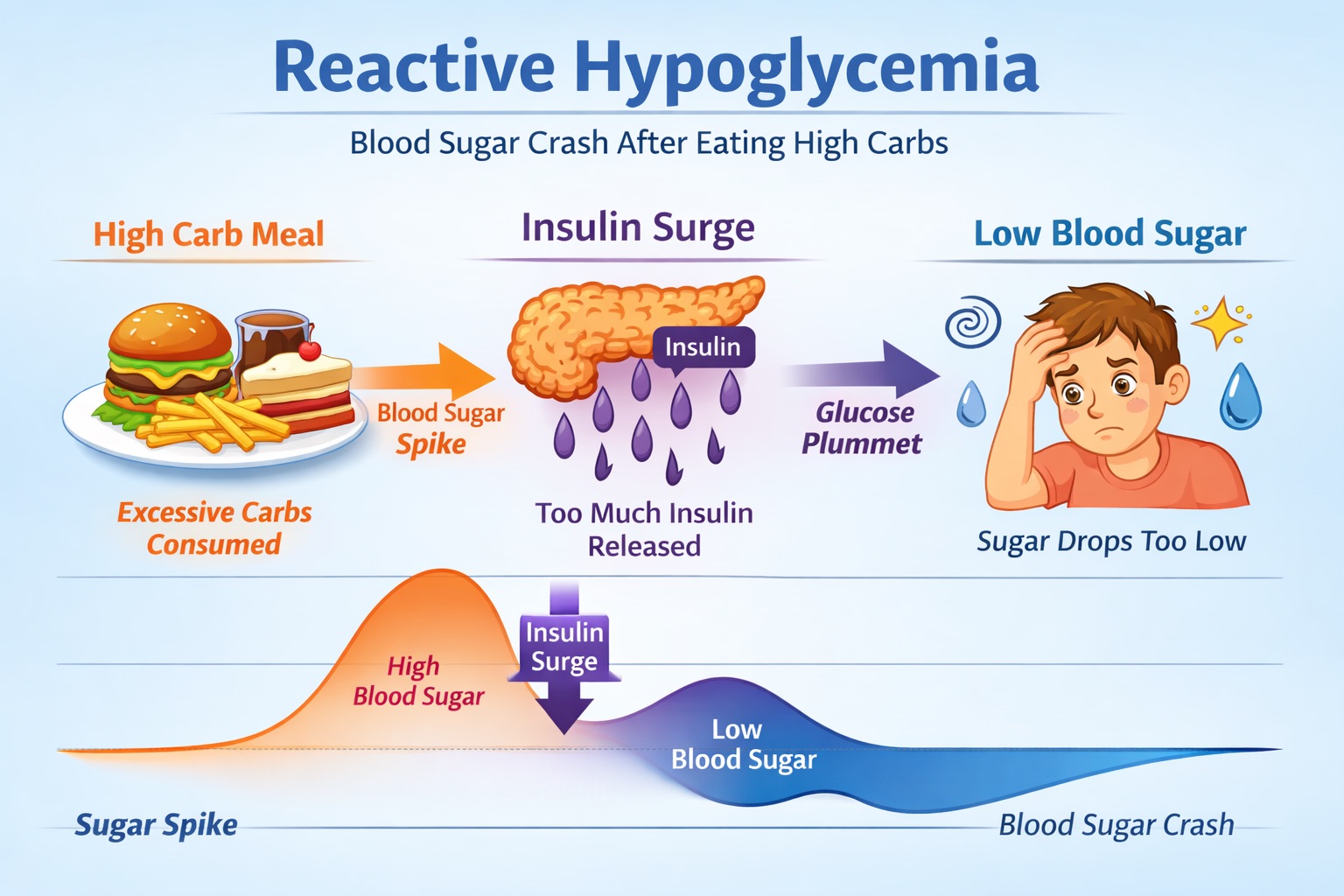
Reactive hypoglycemia is a drop in blood sugar (<70 mg/dL) that occurs about 1–4 hours after eating or drinking something high in refined carbohydrates or added sugars.
What Does It Feel Like?
Common symptoms may include:
- Shakiness
- Sweating
- Anxiety
- Irritability
- Lightheadedness
- Brain fog
Note: Symptoms will vary from person to person.
Why Does It Happen?
After eating simple or refined carbohydrates, blood sugar can rise quickly. In response, the body releases insulin to bring blood sugar back down. Sometimes the body releases more insulin than needed, which can cause the blood sugar to drop too low. Some people may also be more sensitive to insulin, which can make these drops more likely after meals.
In general, the quicker and higher blood sugar rises, the more likely it is to drop afterward. Picture riding a rollercoaster with a steep climb. As the car slowly makes its way to the top, you can feel the anticipation building, knowing a steep drop may be coming. Blood sugar can sometimes behave in a similar way. Ideally, the body prefers a smoother ride, with blood sugar staying in a more stable range (about 70–180 mg/dL).
What Foods Can Trigger It?
The main foods that cause this insulin overshoot are high amounts of simple or refined carbohydrates. Here are some examples:
- white pasta
- white rice
- white bread
- candy/cookies/dessert
- juice
- soda
- large portions of fruit eaten on its own (without protein or fat)
*Note: While carbs are the most common cause, alcohol, and some surgical procedures such as bariatric surgery may also cause this drop.

How to Prevent It
- Keep meals balanced by including carbohydrates, protein, and healthy fats instead of eating carbs on their own.
- Try to eat regularly throughout the day, about every 4–5 hours when possible and add healthy snacks if needed.
- Include plenty of fiber-rich foods like vegetables beans, nuts, and seeds to help slow blood sugar rises.
- Be mindful of large amounts of simple or refined carbohydrates, especially when eaten by themselves.
Note: Most people treat low blood sugar with quick carbohydrates. After following the 15–15 rule and once blood sugar is above 70 mg/dL, adding a small source of protein or fat can help keep blood sugar more stable. For example, a handful of nuts, a piece of cheese, or Greek yogurt.
Key Takeaways
Reactive hypoglycemia can feel surprising, especially when blood sugar drops after eating something high in sugar. This is avoidable by focusing instead on balanced meals and snacks. Including high fiber foods, vegetables, proteins, and eating every 4-5 hours are just a few ways to prioritize a stable blood sugar. Occasional low blood sugar will happen, but let’s prevent it when we can!