If you’ve ever thought, “I should walk more,” but then pictured a long, exhausting trek around the neighborhood, you’re not alone. The good news? You don’t need take a hike to make meaningful progress.
Walking supports steady energy, healthy blood pressure, and can even help lower blood sugar after meals. But the real magic isn’t in doing more all at once — it’s in doing a little more consistently.
Start With Your Real Baseline
Before setting a goal, pause and look at what you’re already doing.
Take 2–3 normal days and check your average steps using your phone, watch, or a simple estimate. That number is your starting line — not a judgment.
If you’re averaging 1,000 steps per day, that’s your anchor. You’re not trying to jump to 6,000 overnight. You’re building from where you are today.
Think of it like turning up a dimmer switch, not flipping on stadium lights.
Use Small Step “Bumps”
Progress works best when it’s barely noticeable at first.
Add 250–500 steps per day and hold that number steady for 1–2 weeks before increasing again.
It might look like this:
- Weeks 1–2: Baseline + 250 steps/day
- Weeks 3–4: Baseline + 500 steps/day
- Weeks 5–6: Baseline + 750–1,000 steps/day
That extra 250 steps? It’s roughly 2–3 minutes of walking. Small enough to do. Big enough to matter.

Use the “Two Good Days” Rule
Missed a day? That’s normal.
Instead of thinking, “I blew it,” just aim for two solid walking days in a row and continue forward. No restarting. No punishment walks. Just momentum.
Consistency beats intensity every time.

Mini-Walks: The Game Changer
Picture this: you finish lunch and instead of sitting right away, you walk for five minutes. Just around the block. Or up and down the hallway.
That short walk helps regulate blood sugar, boosts energy, and adds steps without feeling like “exercise.”
Mini-walk ideas:
- After meals: 5–10 minutes after lunch or didinnerorning reset: 3–5 minutes after coffee or brushing teeth
- Morning reset: 3–5 minutes after coffee or brushing teeth
- Work breaks: 2–5 minutes every hour or two
- Phone calls: pace while talking
- TV time: walk during one commercial break
Those short bursts might not feel impressive in the moment. But by the end of the day, they add up faster than you think.
When Weather Gets in the Way
Rain, heat, ice, or safety concerns don’t mean your steps are canceled.
Create a simple indoor loop:
Living room → hallway → kitchen → repeat.
Or choose destinations that don’t feel like workouts:
- Walk a few laps around the grocery store before shopping
- Do an aisle loop in a big-box store
- Visit a mall early in the day
- Use a community center track
Movement is movement. It doesn’t need perfect scenery.
Make It Automatic
The easiest habit is the one attached to something you already do.
Try simple anchors:
- After I take my meds, I walk 5 minutes
- After lunch, I walk for 7 minutes.
- After I close my laptop, I walk for 10 minutes.
- During the first five minutes of TV, I walk.
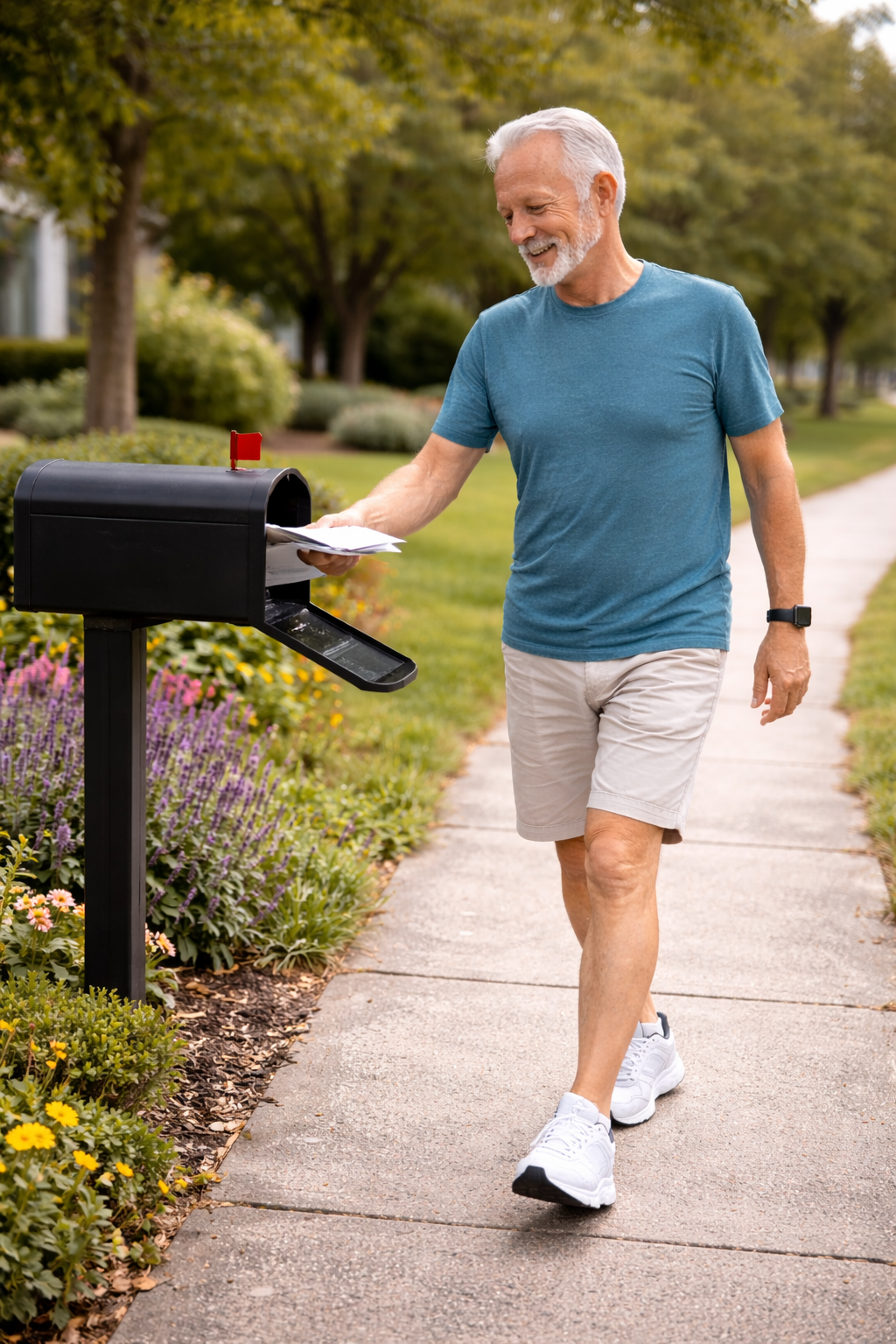
Over time, it stops being a decision and becomes routine. One of my favorite ways to anchor exercise into my life is this:
After I get the mail, I walk to the end of the street.
Bottom Line
You don’t need a dramatic plan. You need a plan that fits into real life — even busy, imperfect days. Start with your baseline. Add small step bumps. Use mini-walks. Keep going after missed days. The best walking plan isn’t the most intense one. It’s the one that actually happens.