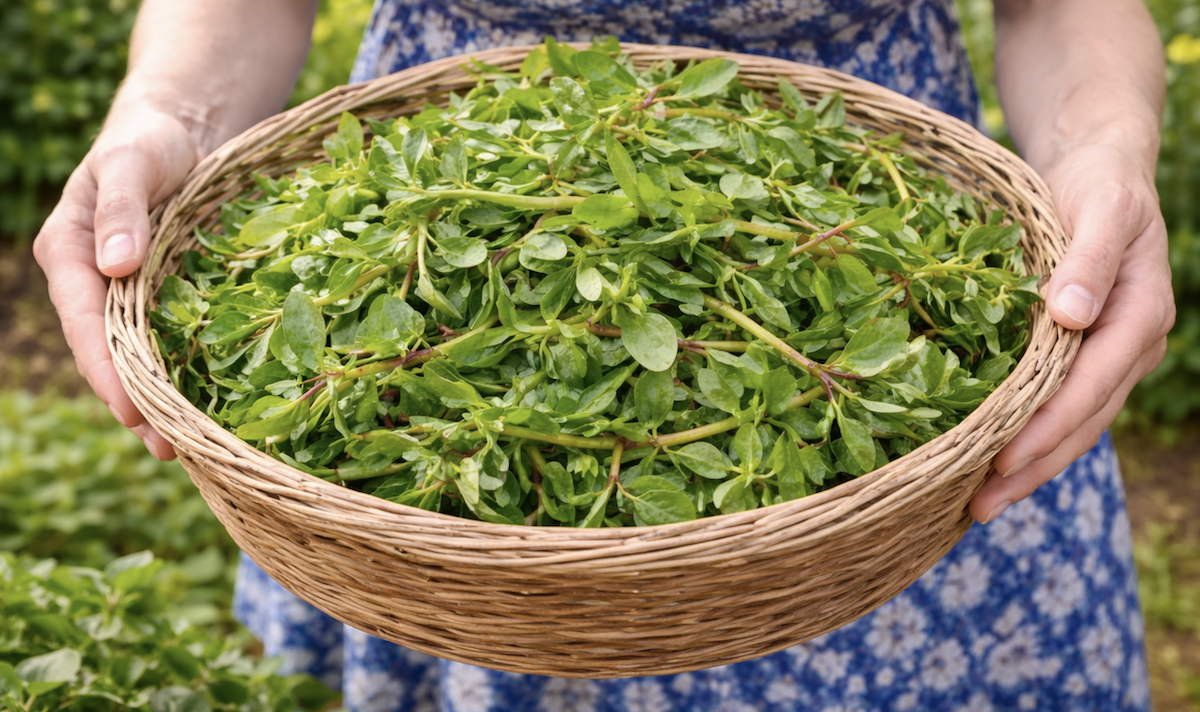
Purslane—also known as verdolagas—is a tender, slightly lemony green that has been eaten for centuries across Mediterranean, Middle Eastern, Latin American, and Asian cuisines. Often considered a “wild green,” purslane is exceptionally nutrient-dense and refreshing, making it an ideal base for a simple, vibrant salad.
Why Eat Purslane?
Purslane stands out nutritionally for several reasons-- it is rich in omeg
a-3 fatty acids (ALA), an uncommon feature for leafy greens, high in antioxidants, including vitamins A, C, and E, it is a good source of magnesium, potassium, and calcium, and it also contains mucilaginous fiber, which may support gut health, cholesterol lowering, and digestion. Because of its water content and mineral profile, purslane is often described as “cooling” and hydrating.
The Recipe
Preparation time: 15 minutes
Ingredients (serves 5)
- 2 cups fresh purslane, thick stems trimmed, tender leaves and tips retained
- 1/2 cup red onion, thinly sliced into ribbons, or diced.
- 1 small cucumber, sliced or chopped
- 1–2 tablespoons extra-virgin olive oil
- 1/2 cup tomatoes (optional)
- 1/4 cup pitted olives (optional)
- Juice of ½ lemon (to taste)
- Pinch of sea salt
- Optional: crumbled feta cheese, cherry tomatoes, or toasted seeds (pumpkin or sunflower)
Instructions
- Rinse purslane thoroughly and pat dry.
- In a bowl, gently toss the purslane with red onion and cucumber.
- Drizzle with olive oil and lemon juice.
- Season lightly with salt and toss again just before serving.
- Add optional toppings if desired.

How This Dish Is Enjoyed Across Cultures
Purslane is a truly global green, and while the base ingredient stays the same, preparation styles vary widely depending on regional tastes, climate, and culinary traditions:
- Mexican & Latin American kitchens:
Verdolagas are often used both raw and cooked. In salads, they’re commonly paired with onion, tomato, lime, and sometimes queso fresco. In cooked dishes, they may be simmered with garlic, tomatillo, or chile, or added to stews and egg dishes. - Middle Eastern & Mediterranean traditions:
Purslane is frequently served raw in simple salads with lemon, olive oil, cucumber, and sometimes yogurt or labneh. It’s valued for its refreshing, cooling quality, especially in warm weather. - Greek cuisine:
Known as glystrida, purslane is often mixed with tomato, olive oil, vinegar or lemon, and feta cheese, creating a bright, briny salad that balances rich or grilled foods. - Chinese culinary use:
While purslane appears more often cooked than raw, it may be lightly blanched or stir-fried and dressed simply with garlic and sesame oil. In this context, it’s often appreciated for both its flavor and its traditional “cooling” properties. - South Asian and Unani-influenced regions:
Purslane may be incorporated into cooling summer dishes, lightly dressed or cooked with minimal spices, aligning with traditional views of balancing internal heat.
Across cultures, the common thread is simplicity—purslane is typically paired with acid, healthy fats, and minimal seasoning to highlight its natural texture and nutritional value.
Nutrition Facts per serving (1 cup)
Calories: 40 | Total fat: 1g | Sat fat: 0g | Sodium: 25 mg | Total Carbohvdrate: 4g | Sugars: 0 g | Dietary Fiber: 4g | Protein: 3g