Knowing Reps and Sets can help you build your plan and monitor your progress over time.
- Rep (repetition) is one full movement of an exercise; for example, 1 squat = 1 rep.
- A Set is a group of reps done in a row before you rest. For example: 10 squats, then rest; 1 set of 10 reps.
Why Do Different Rep Ranges Matter?
Different rep ranges train your body in different ways. Think of it like choosing what you want your workout to focus on-- either strength, muscle growth, or endurance.
Higher reps (like 12–20) with lighter resistance (lighter weight) help your muscles learn to work longer without tiring as quickly. This is great for daily activities like climbing stairs, walking longer distances, or carrying groceries without getting fatigued. This helps you build your body’s endurance, so you can handle being active for a longer session.
Do more reps and fewer sets when:
- You’re using lighter weight.
- Your goal is building muscular endurance.
- You want to practice good form and control.
- You’re newer to exercise and building confidence.
- Your joints don’t tolerate heavy loads well.
- You want to be able to do activities for long periods of time
Lower reps (like 1–5) with heavier resistance (more weight) train your muscles to produce more force. Because the weight is heavier, you’ll need more rest between sets — and typically perform more sets to get enough total work in safely. This helps you build both strength and muscle while staying joint-friendly and manageable.
Do more sets and lower reps when:
- You’re using heavier weight.
- Your goal is building strength and power.
- You want to challenge your muscles more intensely.
- You can maintain good form with heavier loads.
The key isn’t choosing one forever. It’s choosing the range that matches your current goal — and adjusting as you progress.
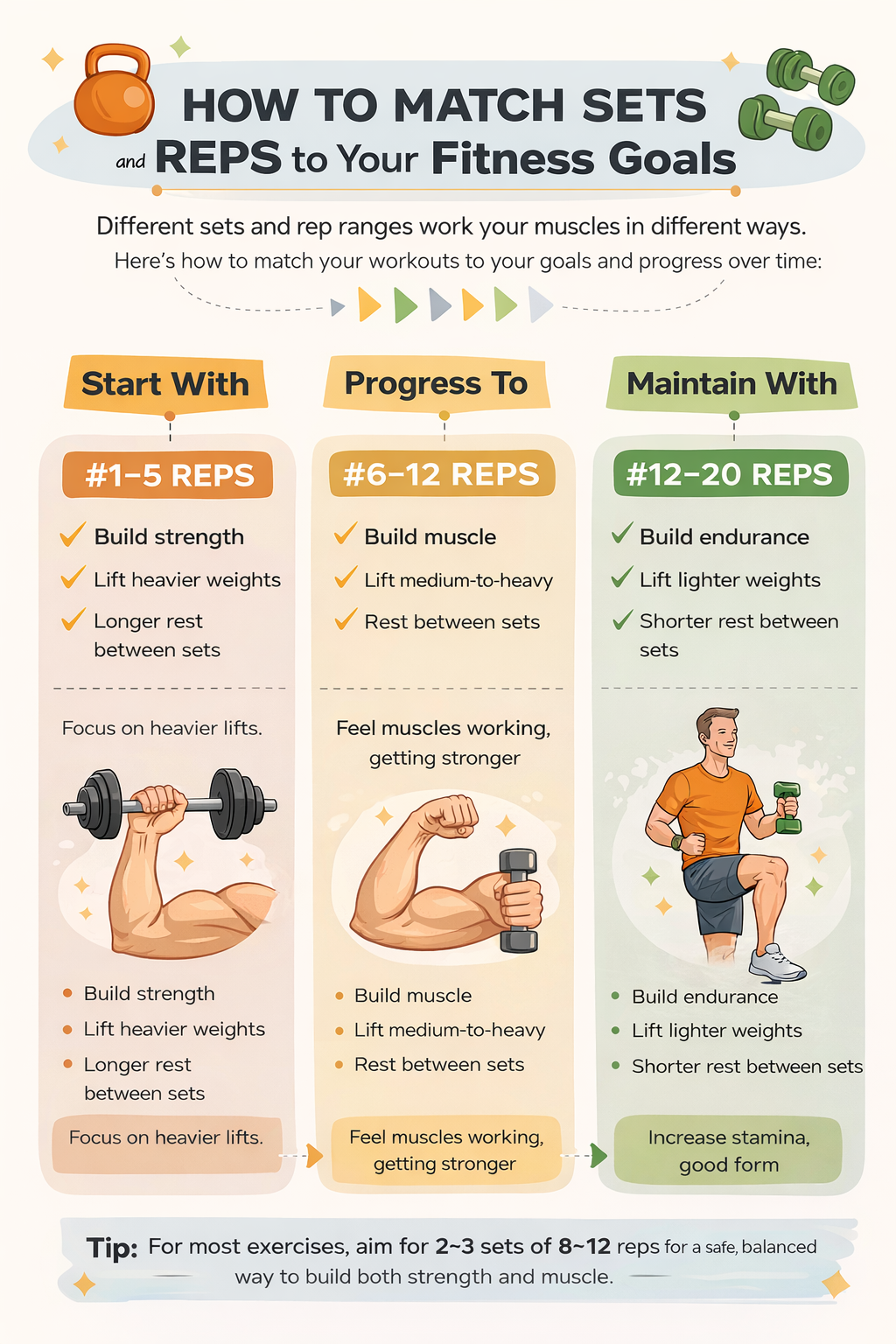
Start With: 1–5 reps “Strength building”
What’s it like: heavyweight, short sets, longer rest
What it helps with: getting stronger and more powerful
Why: your body produces a lot of force for a short time
Don’t Forget to Rest: rest about 2-4 minutes between each set to help your muscles recover enough to do the next set well.
Progress to: 6-12 Reps “Muscle building +strength training”
What’s it like: medium-to heavy weight, feels challenging
What it helps with: building muscle and getting stronger
Why: your muscles work long enough to grow, and the weight still challenges you
Don’t Forget to Rest: rest about 60-120 seconds before starting the next set.
Maintain With: 12-20 reps: “Endurance”
What’s it like: lighter weight, more burning, more breathing
What it helps with: building muscle endurance and practice with good form
Why: Your muscles learn to keep working longer without quitting
Don’t Forget to Rest: rest about 30-60 seconds between each set.
How Hard Should it Feel? A helpful goal: the last 2-3 reps should feel challenging, but you should still be able to keep good form.
Takeaways
For most exercises, start with 2-3 sets of 8-12 reps (This is a safe, effective range for building strength and muscle).
Knowing your sets and reps helps you track progress instead of guessing. Next up: 4 Simple Ways to Progress Your Exercises, where we’ll cover how to “level up” your workouts step-by-step.