This simple Korean side dish highlights the slightly bitter, earthy flavor of dandelion greens, balanced with savory, nutty, and umami-rich seasonings. It’s a nutritious, plant-based dish often served as part of a traditional Korean meal (banchan) and is especially valued for its detoxifying and digestive benefits.

Ingredients
- 1 bunch dandelion greens (about 6–8 oz), washed thoroughly and roots pulled apart
- 1–2 cloves garlic, minced
- 1 tablespoon soy sauce (or tamari)
- 1 teaspoon sesame oil
- 1 teaspoon sesame seeds
- 1–2 teaspoons gochujang (optional, for spice)
- 1 teaspoon rice vinegar (optional, for brightness)
- ½ teaspoon sugar (optional, to balance bitterness)
- Salt (for blanching water)
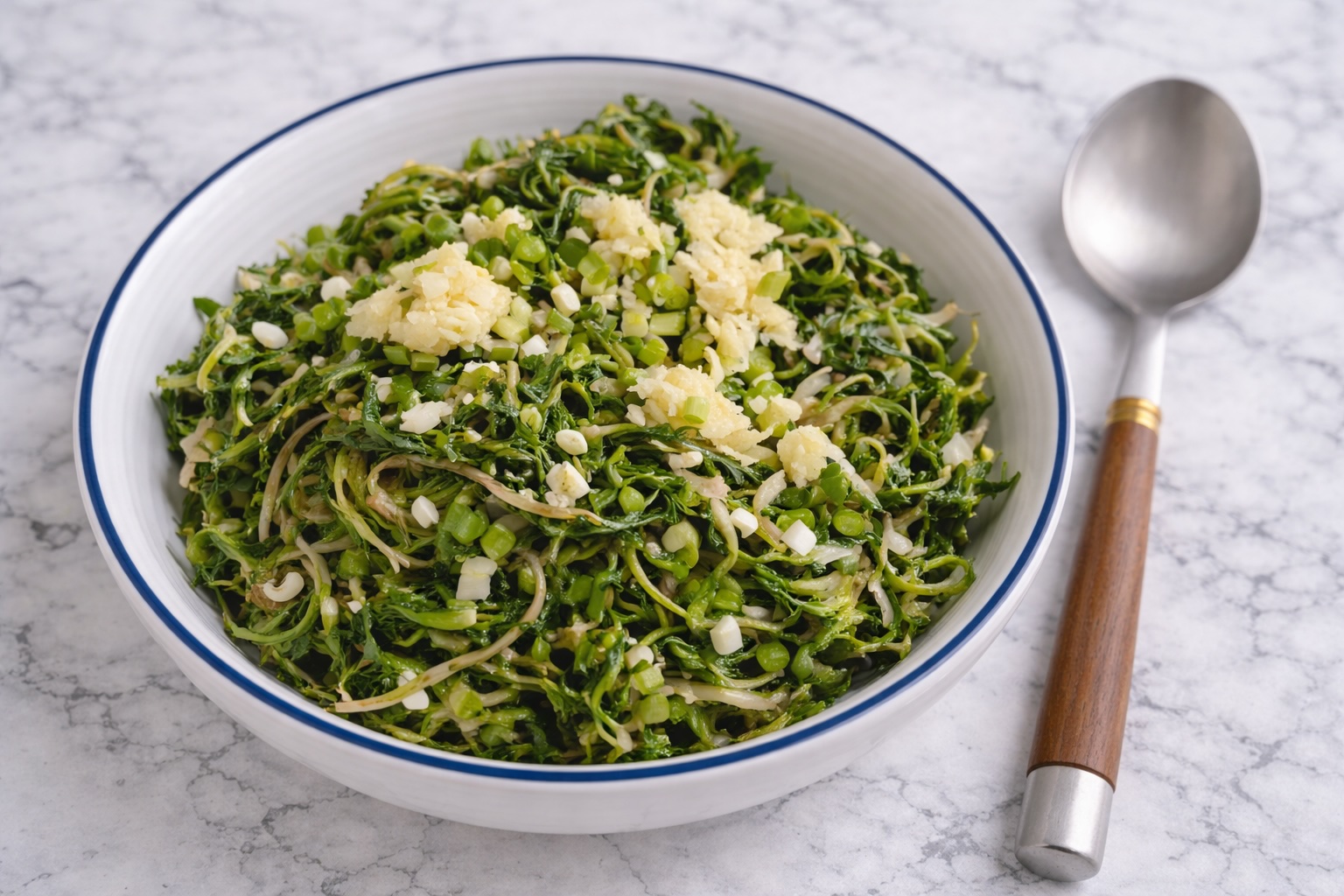
Instructions
- Prepare the greens: Trim off any tough ends and rinse the dandelion greens thoroughly to remove dirt or grit.
- Blanch the greens: Bring a pot of salted water to a boil. Add the greens and blanch for 30–60 seconds, just until wilted. Immediately transfer to cold water (ice bath if available) to stop the cooking process.
- Drain and squeeze: Drain well and gently squeeze out excess water. This step is important to prevent the dish from becoming watery.
- Cut them up: Cut the greens into bite-sized pieces.
- Season: In a mixing bowl, combine: garlic, soy sauce, sesame oil, sesame seeds, gochujang (if using), vinegar and sugar (optional).
- Mix it all together: Add the greens and toss well until evenly coated.
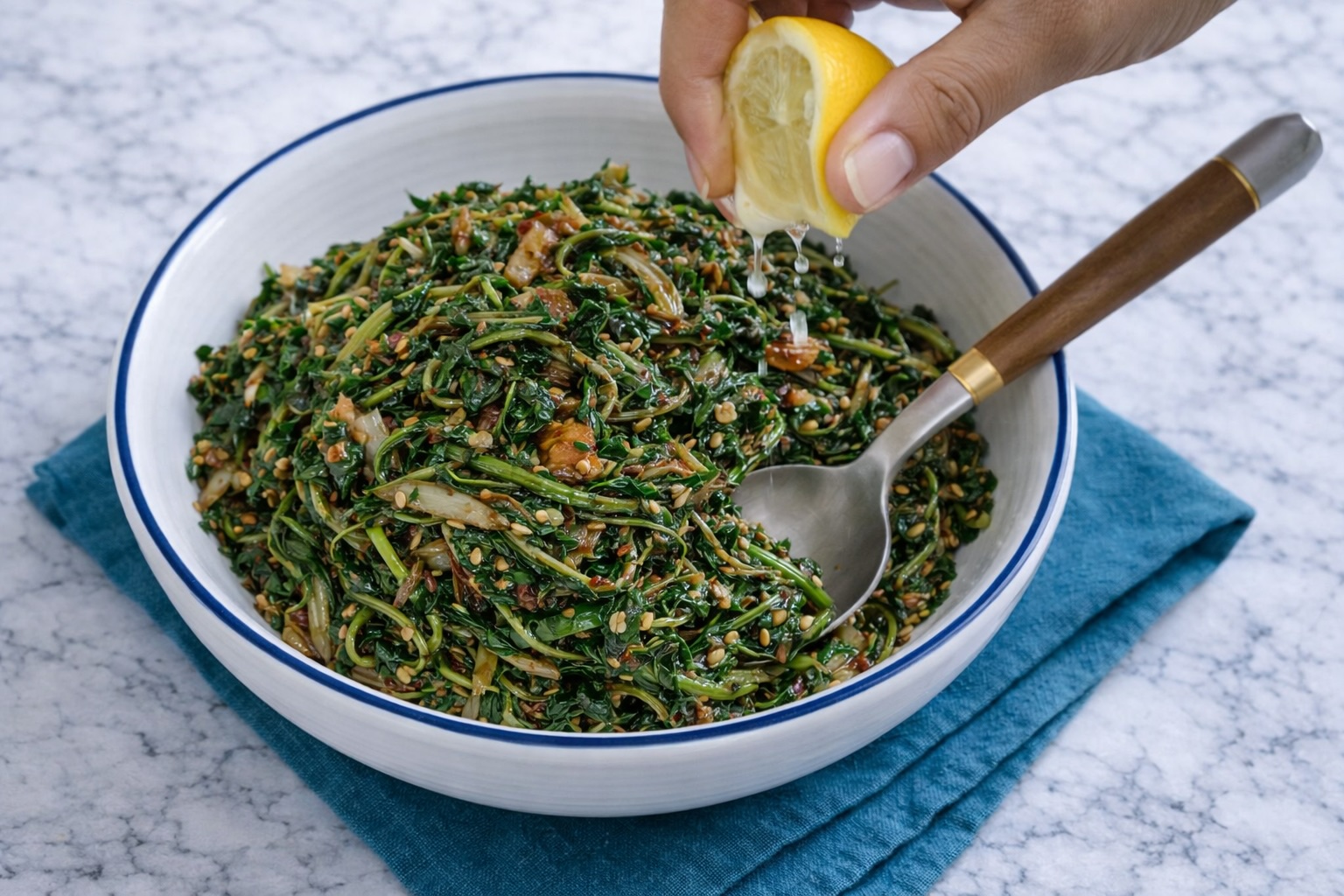
- Taste and adjust the seasoning as needed: Add more soy sauce or a touch of lemon juice for saltiness, add sugar to reduce bitterness, or add gochujang for more heat
- Serve: Serve slightly chilled or at room temperature as a side dish. It pairs well with rice, grilled meats, tofu, or other Korean dishes.
Tips
- Bitterness control: Blanching helps reduce bitterness, but you can blanch slightly longer if preferred.
- No gochujang version: Skip the chili paste for a more traditional, mild namul.
- Add-ins: A small amount of chopped green onion can add freshness.
- Substitutions: This same method works with spinach, kale, or mustard greens.