If you've started a GLP-1 medication and felt queasy within the first few days, you're not alone. Nausea is the most commonly reported side effect of GLP-1 medications, affecting an estimated 15 to 50 percent of people, especially in the first month of treatment. Here's why it happens, and the practical steps that can help you feel better while your body adjusts.
Why It Happens
GLP-1 medications work in part by slowing down how quickly food leaves your stomach. This helps you feel full longer, but it also means food sits in your stomach a little longer than usual, which can trigger nausea. The medication also acts directly on areas of the brainstem that control nausea and appetite. In other words, nausea is not a sign that something is wrong. It's a direct, expected result of how the medication works.
When to Expect It
Nausea is most common in the first few weeks after starting a GLP-1 medication, and it often flares up again after a dose increase. For most people, it eases within a week or two as the body adjusts. Nausea that shows up right after a dose change is expected. Nausea that never lets up may mean your dose is being increased too quickly, which is worth flagging to your care team.
How to Manage It
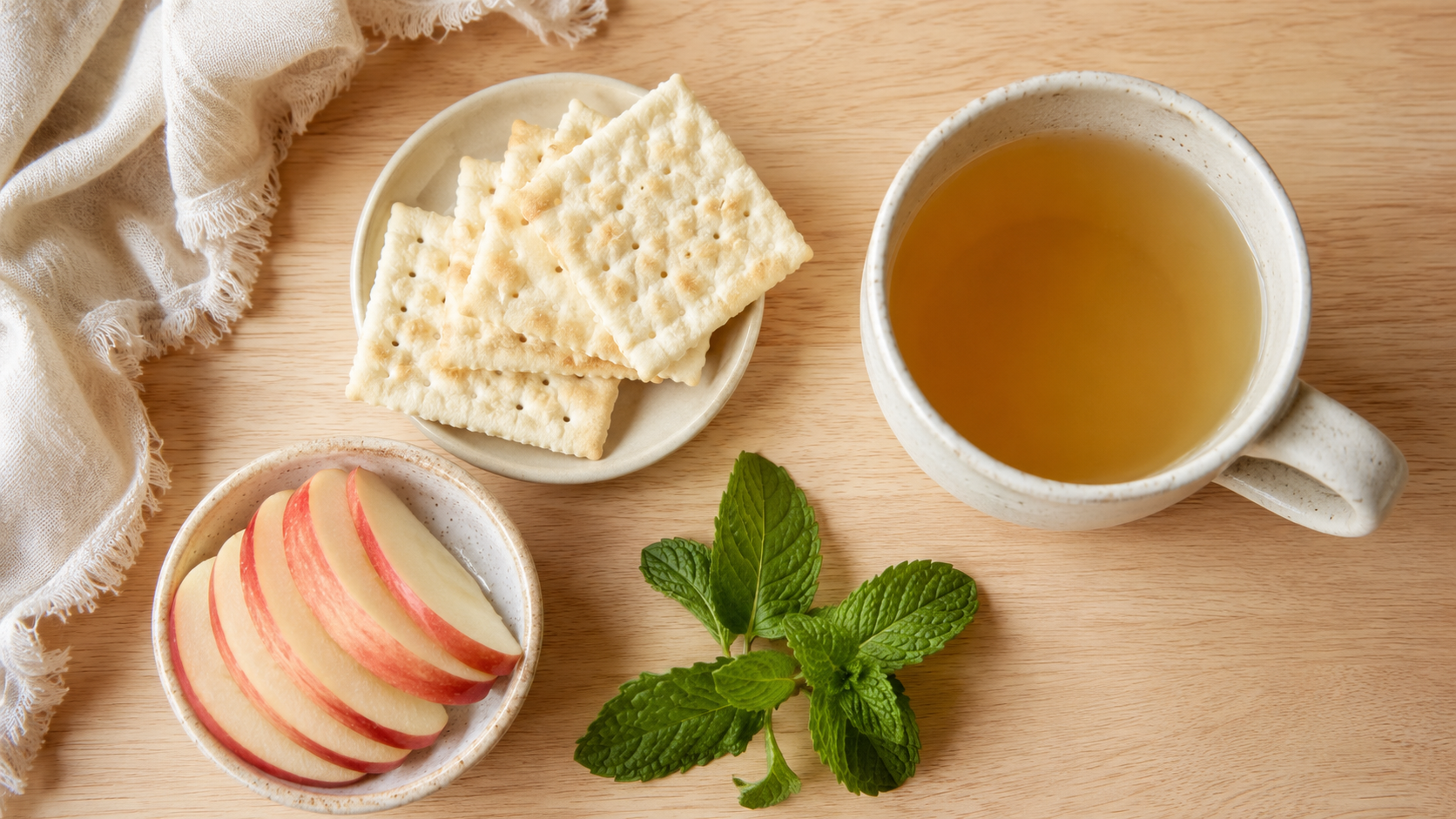
- Try soothing foods and beverages: crackers, apples, or ginger and mint-based drinks about 30 minutes after taking your medication may bring relief.
- Avoid trigger foods: fatty, fried, and spicy foods tend to make nausea worse.
- Steer clear of strong smells: keep your kitchen well ventilated and avoid cooking foods with strong scents when nausea is active.
- Eat smaller, slower meals: a full plate puts more demand on a stomach that is already emptying slowly. Smaller, more frequent meals are easier to tolerate.
When to Call Your Provider
Mild nausea in the first few weeks is expected and usually manageable at home. If nausea does not improve after several weeks, or comes with persistent vomiting, contact your physician. That level of vomiting can lead to dehydration, problems with the teeth, and malnutrition.
Helpful Products to Have on Hand
A few items can make the first few weeks easier to manage. Ginger chews or ginger tea, such as The Ginger People or Traditional Medicinals, are a simple way to settle mild queasiness between meals. Bland, easy-to-digest crackers, such as saltines or a whole-grain option like Wasa or Ryvita Superseeds, work well when you need something small on your stomach. A flat ginger ale or ginger-based sparkling water can also help in the moment. These are just examples of the type of products people often find helpful, not a required list, so feel free to substitute whatever similar option you already have on hand.
Takeaways
Nausea is one of the most common GLP-1 side effects, but for most people it fades as the body adjusts. Small changes in what and how you eat can make a real difference in the meantime. As always, reach out to your Care Team if your symptoms do not improve. For a full rundown of other common side effects, see Managing GLP-1 Side Effects: 9 Common Issues and Solutions. GLP-1s can also affect how well you meet your nutrient needs, so GLP-1 and Nutrition: Breaking Down the Macro- and Micronutrients is worth a look too. And if you are curious what happens down the road, read What Actually Happens When You Stop GLP-1s.