How Exercise Improves Blood Sugar
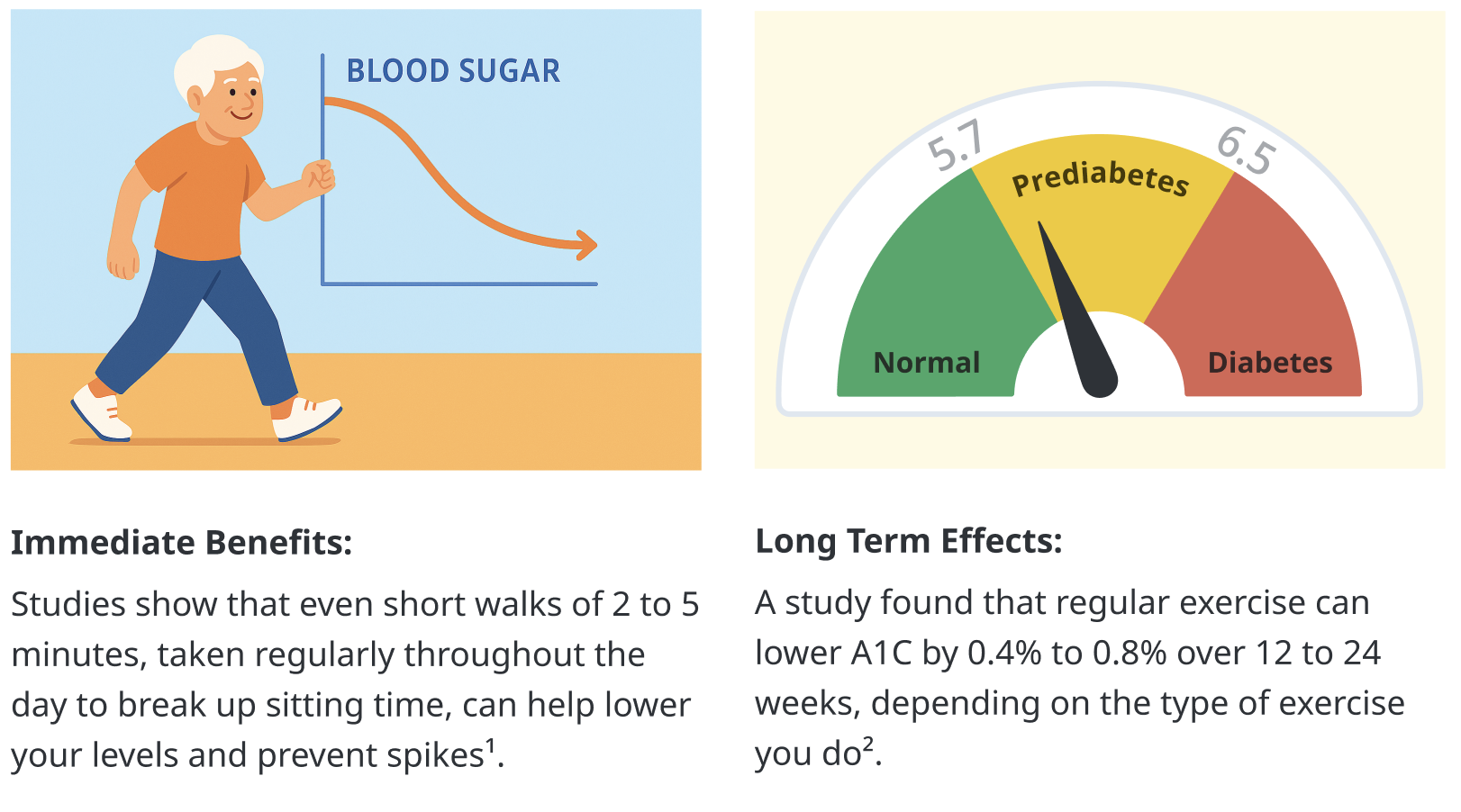
Combining both cardio and strength training is the most effective approach. Let’s take a closer look at each type.
Cardio Exercise
The Benefits
Cardio exercise is great for your heart. It gets your blood flowing, helps your lungs work better, and can even lower your blood pressure and blood sugar. But wait—there’s more! It also boosts your energy, lifts your mood, supports a healthy weight, and helps you sleep better and manage stress.
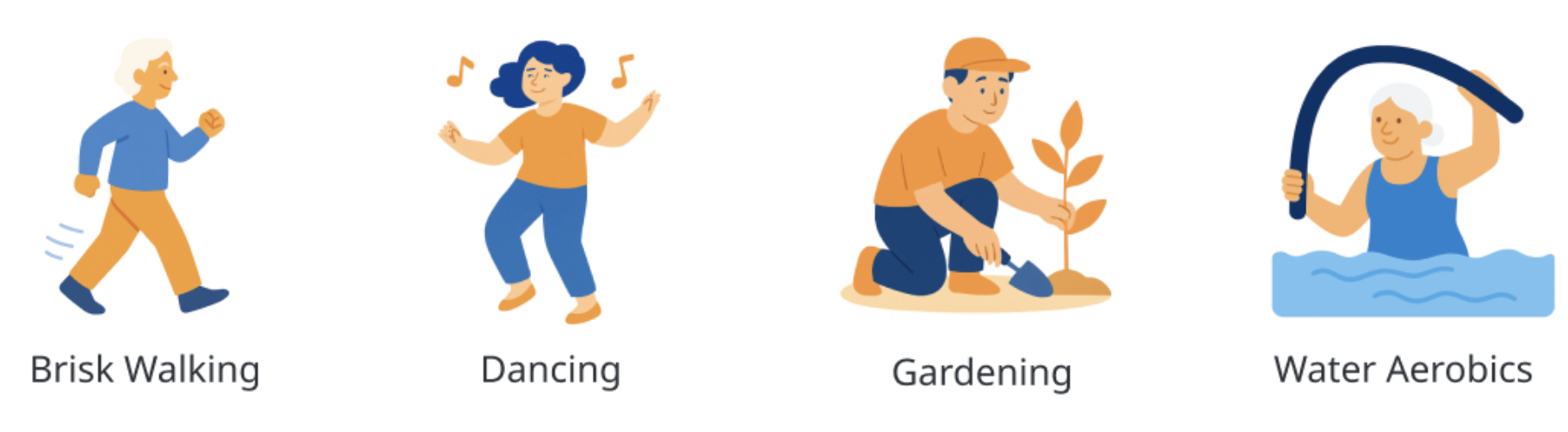
Moderate Intensity Examples:
Ideal for beginners, these exercises make you breathe faster, but you can still talk without too much effort.
Examples:
These exercises take it up a notch. You’ll breathe harder, your heart will race, and talking will be tough without pausing.

Strength Training Exercise
The Benefits
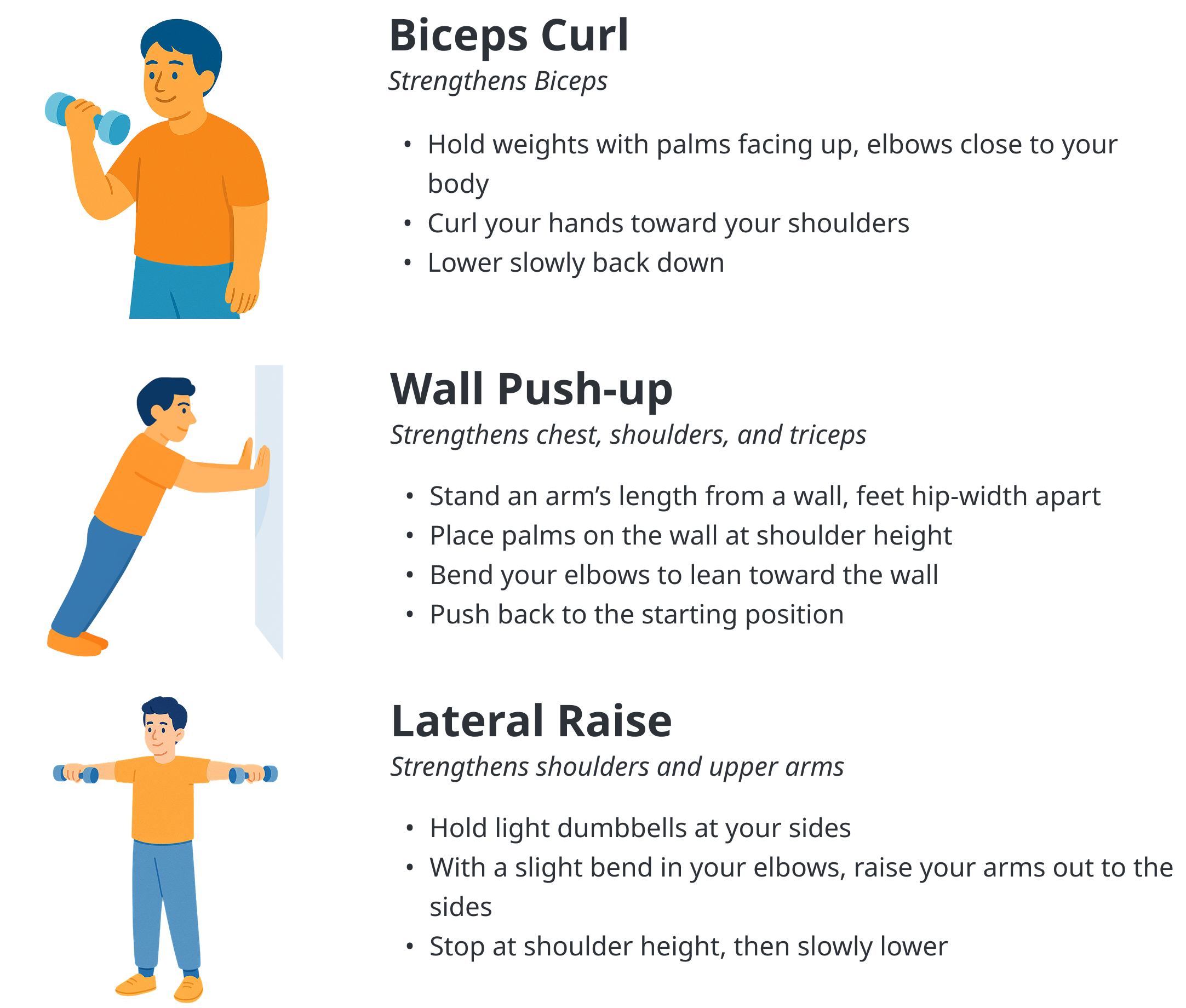
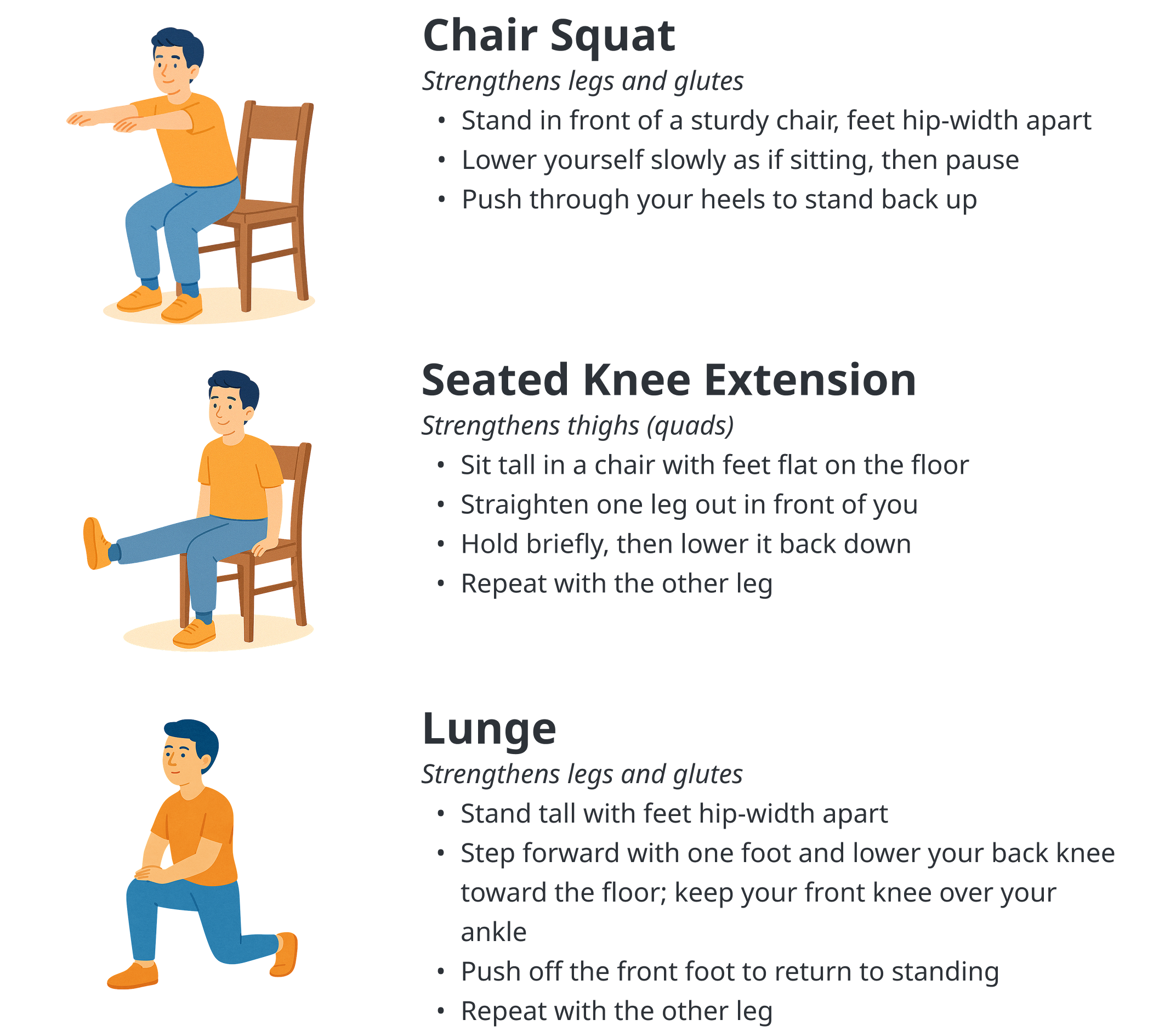
Strength training exercise helps keep your muscles and joints strong. They support balance, protect your joints, and can even help ease muscle and joint pain over time—especially when you do them regularly.
Examples:

How Much to Move Each Week
💪 For Maintenance³

⬇️ To Lose Weight
While 150 minutes of activity each week is great for overall health, aiming for 300 minutes can support weight loss and lead to even greater health benefits.
People who reach 300 minutes a week often notice better sleep, a brighter mood, and more energy throughout the day.
The Power of Small Everyday Movements
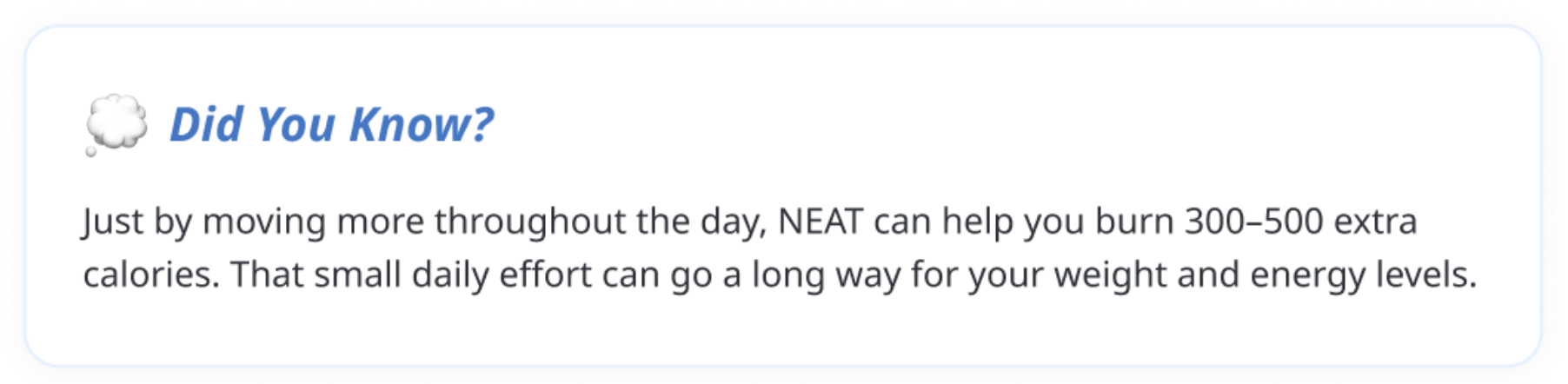
In addition to your regular workouts, the small movements you make throughout the day also support better health.
This is called Non-Exercise Activity Thermogenesis, or NEAT.
What Does NEAT Include?
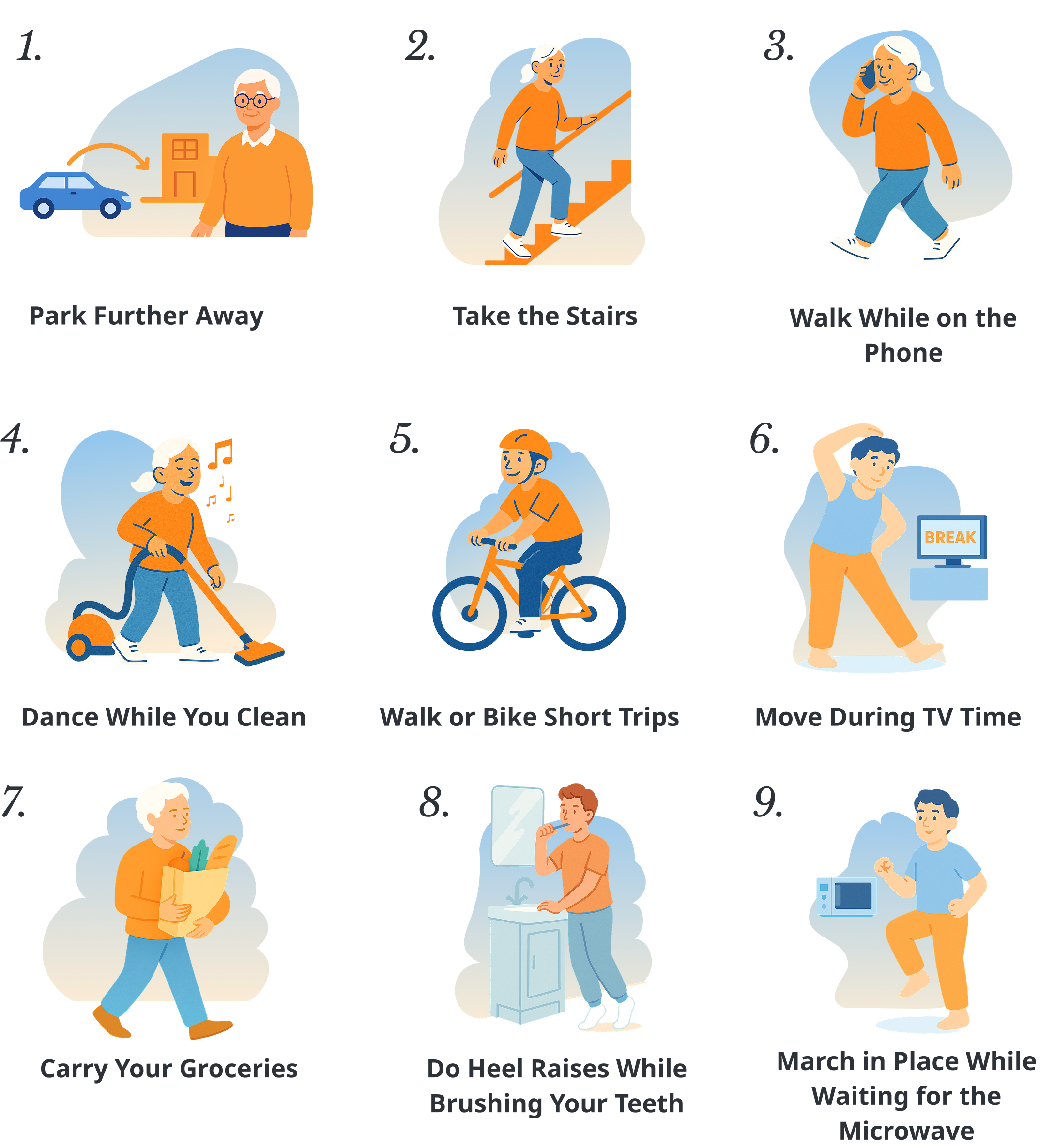
NEAT includes things like walking around the house, standing up to stretch, tidying the kitchen, or taking the stairs. Try these 9 easy ways to move more daily.
References:
- Buffey, A. J., Herring, M. P., Langley, C. K., Donnelly, A. E., & Carson, B. P. (2022). The acute effects of interrupting prolonged sitting time in adults with standing and light-intensity walking on biomarkers of cardiometabolic health in adults: A systematic review and meta-analysis. Sports Medicine, 52(9), 1765–1787. https://doi.org/10.1007/s40279-022-01649-4
- Church, T. S., Blair, S. N., Cocreham, S., Johannsen, N., Johnson, W., Kramer, K., ... & Earnest, C. P. (2010). Effects of aerobic and resistance training on hemoglobin A1c levels in patients with type 2 diabetes: A randomized controlled trial. JAMA, 304(20), 2253–2262. https://doi.org/10.1001/jama.2010.1710
- Centers for Disease Control and Prevention. (2022, July 15). How much physical activity do adults need? U.S. Department of Health & Human Services. https://www.cdc.gov/physical-activity-basics/guidelines/adults.html