You're eating well, drinking water, getting decent sleep — and you're still dragging by mid-afternoon. What gives? Sometimes the answer isn't on your plate in an obvious way. It's buried in the chemistry of how your body actually converts food into energy.
Certain nutrients act as the behind-the-scenes crew in your body's energy production. Without enough of them, the whole system slows down — even if you're eating all the right foods.
B Vitamins: The Spark Plugs
If your metabolism were an engine, B vitamins would be the spark plugs. They don't provide energy directly — but without them, your body can't efficiently convert the carbs, fats, and proteins you eat into usable fuel.
There are eight B vitamins in total, but B12, B6, and folate get the most attention for energy. B12 helps your body make red blood cells, which carry oxygen to every organ and muscle. When B12 is low, fatigue is often the first sign — your cells literally aren't getting enough oxygen to do their jobs.
You'll find B vitamins in eggs, poultry, fish, leafy greens, legumes, and fortified cereals. If you follow a plant-based diet, B12 is one to watch closely since it's found almost exclusively in animal products.
Try this: Habit-stack a B-vitamin check with your grocery list. Every time you write your list, make sure at least two B-rich foods — like eggs and spinach — make the cut. Shopping day is your cue.
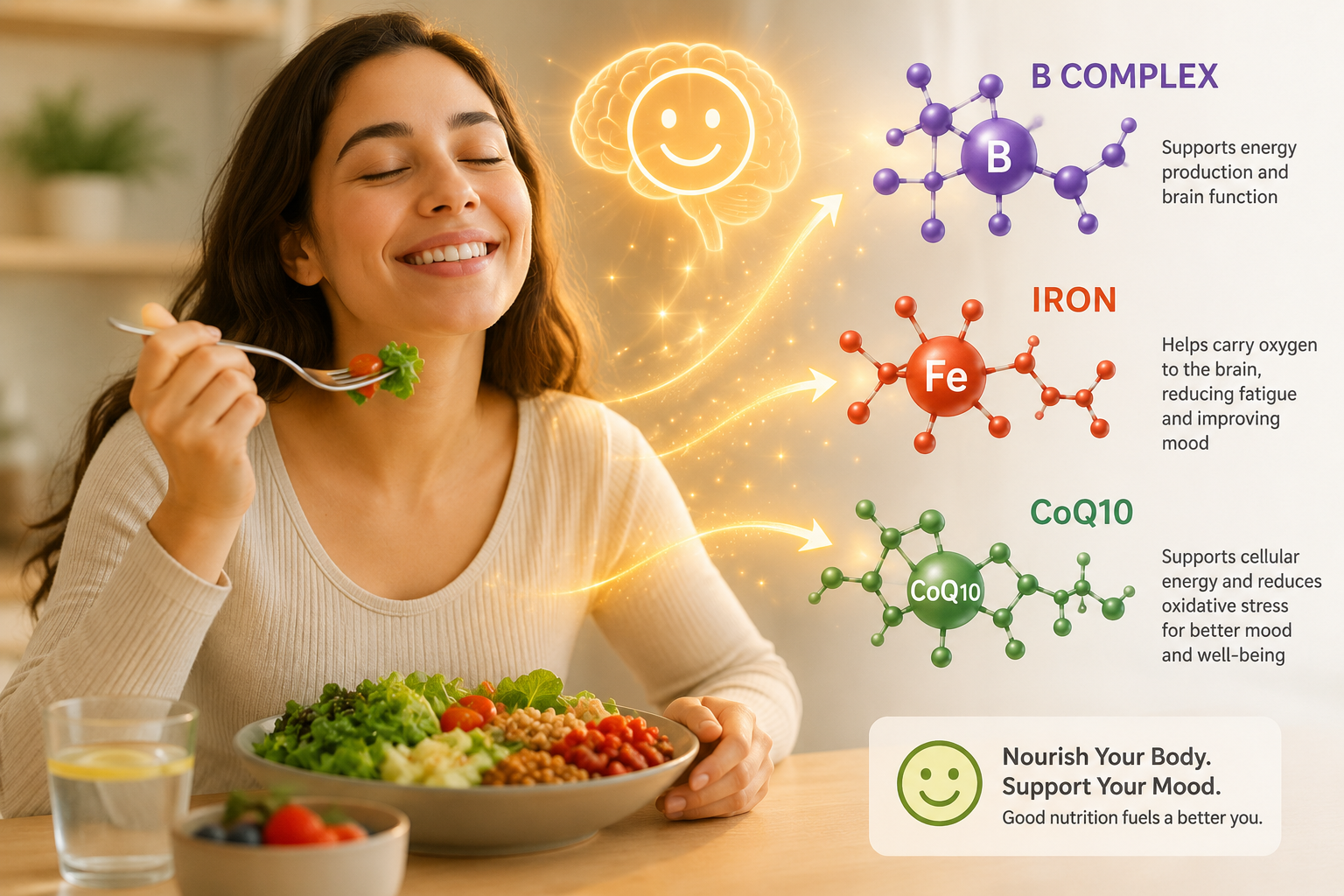
Iron: The Oxygen Delivery System
Iron plays a simple but critical role: it helps your blood carry oxygen. Without enough iron, your muscles and brain don't get the oxygen they need, and the result feels like running on a half-charged battery — tired, sluggish, and foggy even after a full night's sleep.
Think of iron like the delivery trucks in a supply chain. You could have warehouses full of fuel, but if there aren't enough trucks to move it, nothing gets where it needs to go.
Iron-rich foods include red meat, lentils, spinach, tofu, and fortified grains. Pairing iron-rich foods with vitamin C — like squeezing lemon on your spinach — significantly boosts absorption.
Try this: Habit-stack a vitamin C source with every iron-rich meal. When you plate your lentils or spinach, add citrus, tomatoes, or bell peppers. It takes seconds and can dramatically improve how much iron your body actually absorbs.
CoQ10: The Battery Charger
Coenzyme Q10 — or CoQ10 — is a compound your body produces naturally, and it lives inside your mitochondria, the tiny power plants in every cell. Its job is to help convert nutrients into ATP, the molecule your cells use as their primary energy currency.
Think of CoQ10 as the charger that keeps your phone battery topped up. When levels are healthy, your cells produce energy efficiently. When they dip — which happens naturally with age — you feel it as general fatigue that no amount of coffee seems to fix.
You can find CoQ10 in organ meats, fatty fish, beef, peanuts, and broccoli. It's also available as a supplement, though food sources are a great starting point.
Try this: On days you feel unexplainably tired, look back at your meals. Did they include any CoQ10-rich foods? Habit-stack this awareness with your energy dips — when fatigue hits and you can't explain why, use it as a cue to plan a CoQ10-rich dinner.

The Bigger Picture
Energy isn't just about calories in. It's about whether your body has the tools to use those calories efficiently. B vitamins spark the process, iron delivers oxygen to power it, and CoQ10 keeps your cellular engines charged. When all three are working, energy stops being something you chase and starts being something you just have.