Puffiness in the legs, ankles, or belly is often blamed on standing too long or eating salty food, but persistent swelling can also point to a nutrition problem. When the body doesn't have enough protein, particularly albumin, fluid can leak out of blood vessels and pool in surrounding tissue. Recognizing this pattern can help you catch a deficiency before it progresses.
Why It Happens
Albumin is a protein made by the liver that helps keep fluid inside blood vessels by maintaining a balance of pressure between the bloodstream and surrounding tissue. When protein intake is too low, the body can't produce enough albumin, and fluid shifts out of the vessels and builds up in tissue, most noticeably in the legs, ankles, feet, and abdomen.
Low albumin can happen for several reasons. It may be related to poor protein intake, but it can also be caused by liver disease, kidney disease, inflammation, infection, digestive conditions that affect absorption, or other medical problems. Because swelling has many possible causes, it is important to talk with a healthcare provider if swelling is new, persistent, or getting worse.

What It Looks Like
Swelling that leaves an indentation when pressed, puffiness that's worse by the end of the day or after standing, and a rounded or distended belly are common patterns. This swelling sometimes shows up alongside fatigue, muscle wasting, or unintended weight changes that don't match how someone is actually eating.
How to Manage It
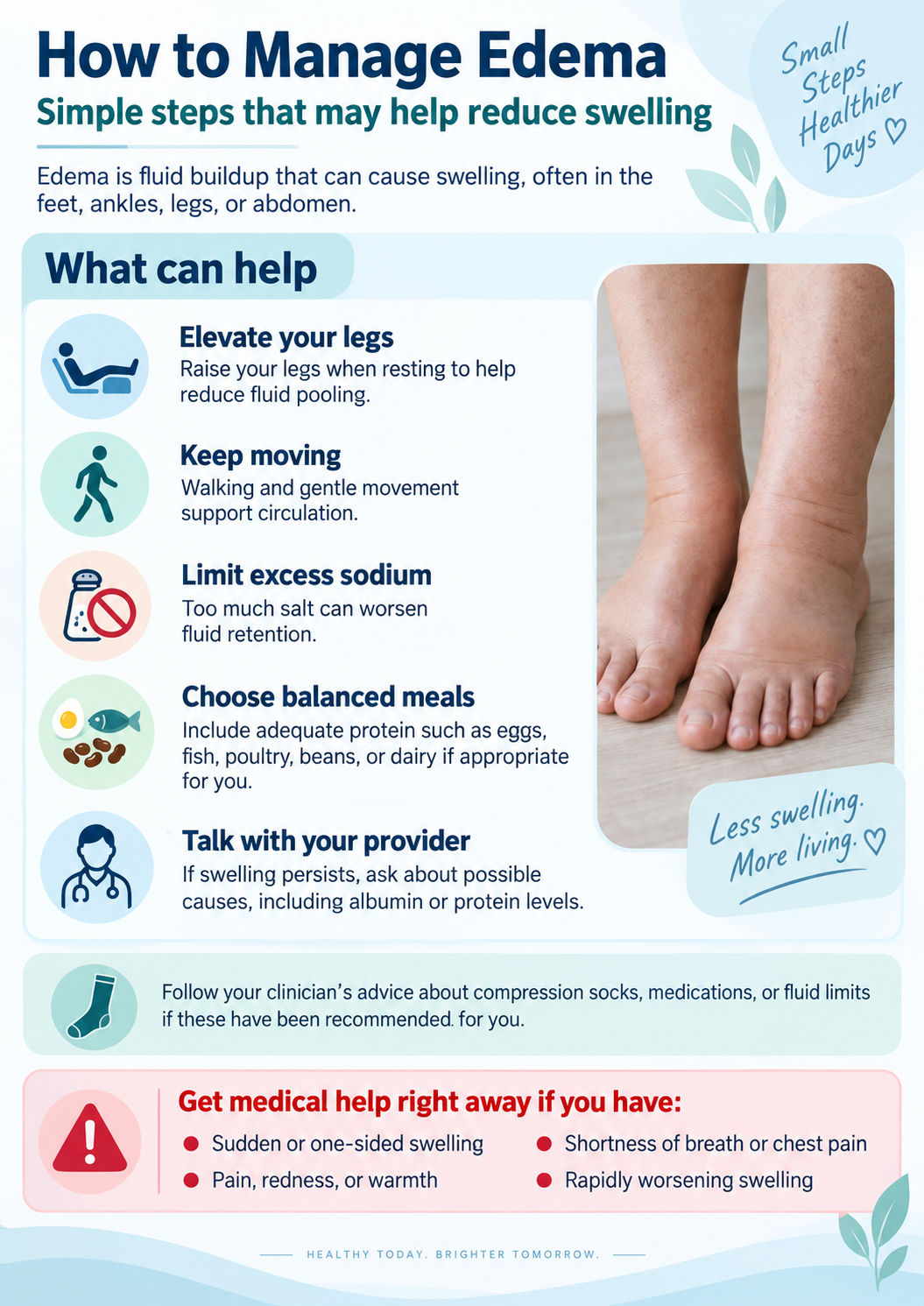
- Prioritize protein at each meal, such as eggs, fish, poultry, beans, or dairy
- Reduce excess sodium, which can worsen fluid retention
- Elevate the legs when resting to help reduce pooling
- Stay physically active when possible, since movement supports circulation
- Ask your provider to check albumin and protein levels if swelling persists
When to Call Your Provider
If swelling comes on suddenly, is only on one side, or is accompanied by shortness of breath, chest pain, or rapid weight gain, seek care right away, since these can signal a more urgent issue. For swelling that develops gradually alongside poor appetite or weight loss, bloodwork can help confirm whether protein deficiency is behind it.
Takeaways
Swelling that doesn't have an obvious cause is worth paying attention to, especially when it shows up alongside other signs of poor nutrition. Getting enough protein day after day helps your body maintain the albumin levels that keep fluid where it belongs. If you're working on rebuilding weight, make sure that effort includes nutrient-dense foods rich in protein, not just extra calories, since protein is what actually corrects the fluid imbalance behind the swelling. And leaning on the everyday habits dietitians swear by can make it easier to keep protein intake steady enough to see lasting improvement.