Pale skin, especially in the face, lips, or inner eyelids, is often written off as just looking tired or being naturally fair-skinned. But when it shows up alongside other symptoms, it can be one of the earlier signs that your body isn't getting enough of certain nutrients. Understanding the link between pale skin and nutrition can help you catch a deficiency before it progresses further.
Why It Happens
Pale skin is often a visible sign of anemia, which happens when your body doesn't have enough healthy red blood cells to carry oxygen efficiently. This is commonly caused by not getting enough iron, vitamin B12, or folate through your diet. Without these nutrients, hemoglobin levels drop, and less oxygen-rich blood reaches the skin's surface, giving it a lighter or washed-out appearance.
What It Looks Like
Pale skin as a sign of malnutrition can appear across the whole body, but it's often easiest to notice in the face, inner eyelids, gums, or nail beds. It may be paired with fatigue, dizziness, shortness of breath, or a rapid heartbeat, since these are all related to low oxygen delivery. Paleness that develops gradually can be easy to miss, so it helps to compare how you look now to photos from a few months ago.
How to Manage It
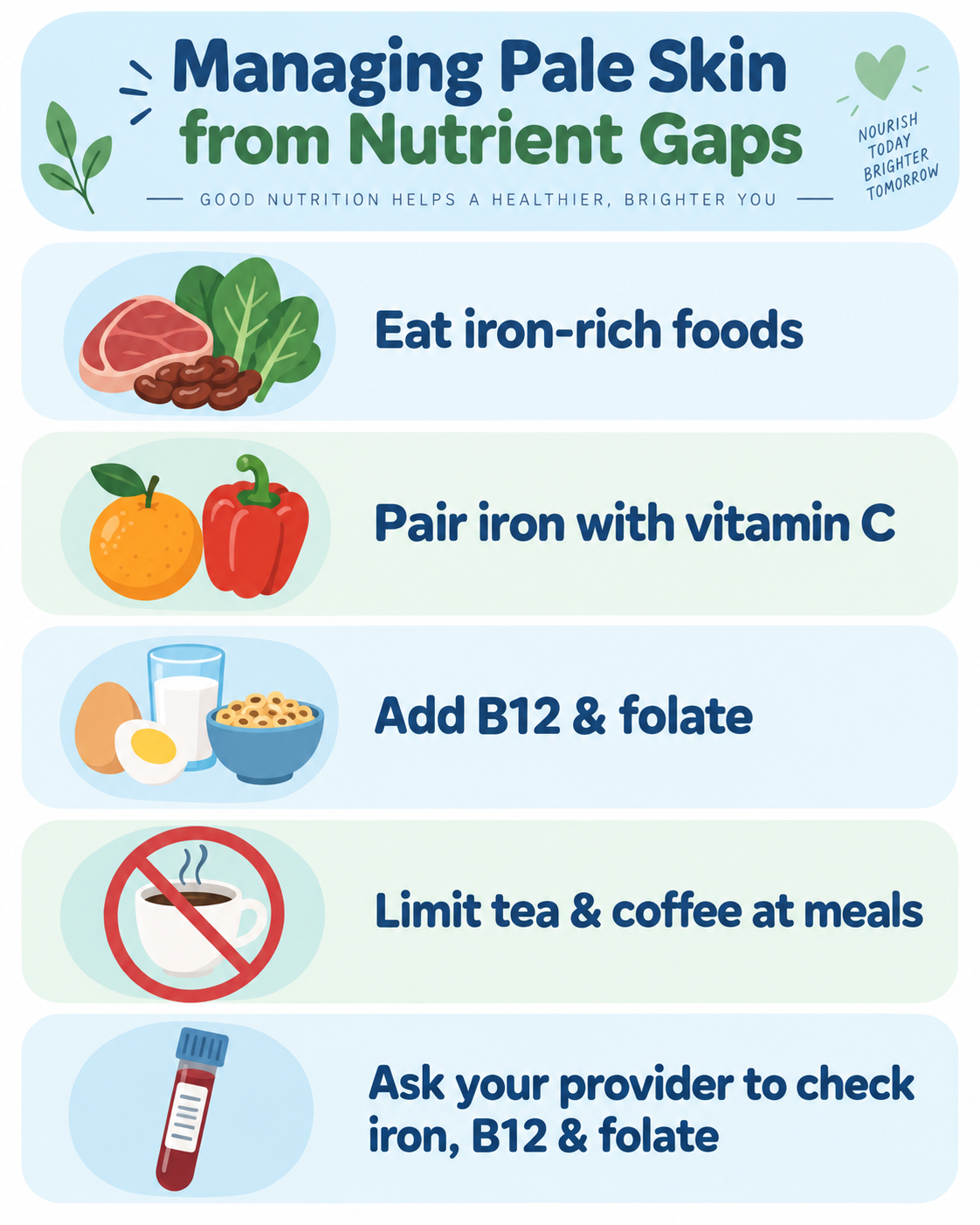
- Include iron-rich foods like lean meats, beans, and leafy greens
- Pair iron-rich foods with vitamin C to help your body absorb it
- Add vitamin B12 and folate sources like eggs, dairy, and fortified cereals
- Limit tea or coffee around meals, since they can reduce iron absorption
- Ask your provider about checking your iron, B12, and folate levels
When to Call Your Provider
If pale skin comes on suddenly, doesn't improve with diet changes, or is paired with fainting, chest pain, or extreme fatigue, it's worth checking in with your care team. Bloodwork can confirm whether anemia or a specific nutrient deficiency is behind the change and help guide the right treatment.
Takeaways
Pale skin on its own isn't usually cause for alarm, but combined with fatigue or dizziness, it can point to a nutrient gap worth addressing. Consistent iron, B12, and folate intake can help restore healthy color and energy over time. If you're working on rebuilding weight, pairing that effort with nutrient-dense foods can help correct the deficiencies that often drive paleness in the first place. And building the everyday habits dietitians swear by, like regular meals and steady hydration, can make it easier to stay consistent long enough to see the difference.