A few new bruises here and there is normal, but bruises that show up without a clear cause, take a long time to fade, or come with tiny red or purple pinpoint spots on the skin can point to something more. This pattern is sometimes linked to low vitamin C or vitamin K, two nutrients your body relies on to keep blood vessels strong and clotting working properly. Understanding this connection can help you catch a deficiency before it becomes something bigger.
Why It Happens
Vitamin C helps build the collagen that keeps the walls of your blood vessels strong, while vitamin K is needed to make the proteins that help your blood clot. When either nutrient runs low, capillaries become fragile and can leak with even minor bumps, and small bleeds under the skin take longer to stop and heal.
What It Looks Like
Bruises that appear from little to no trauma, take longer than usual to fade, or feel more tender than expected are worth noting. Petechiae show up as tiny, flat red or purple dots, often clustered on the lower legs. These signs are sometimes paired with bleeding gums, fatigue, or slow-healing cuts.
How to Manage It
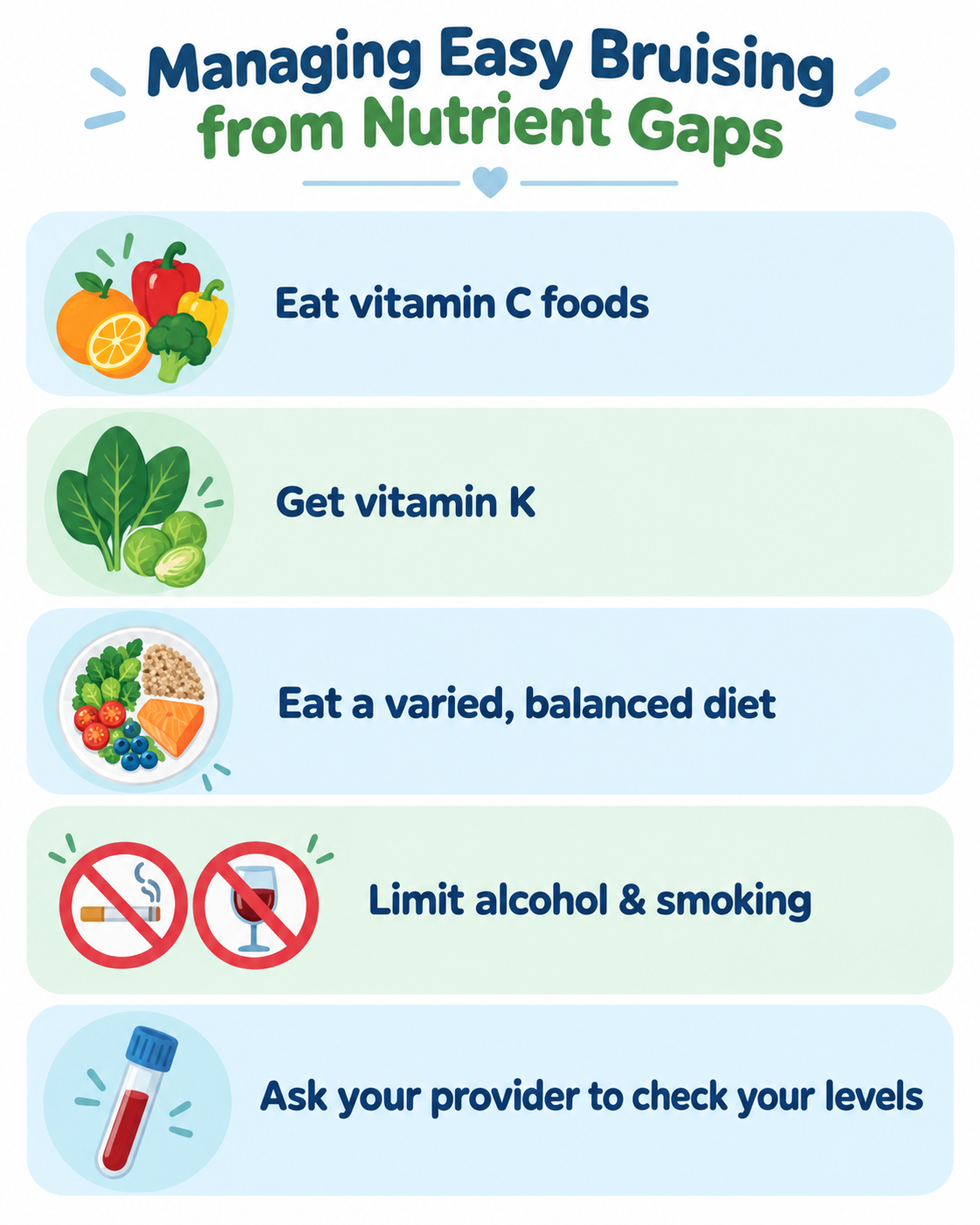
- Add vitamin C-rich foods like citrus fruits, bell peppers, and broccoli
- Include vitamin K sources such as leafy greens, broccoli, and Brussels sprouts
- Eat a varied, balanced diet rather than relying on a few repeated foods
- Limit alcohol and smoking, both of which can interfere with nutrient absorption
- Ask your provider to check your levels if bruising is frequent or unexplained
When to Call Your Provider
If bruising is widespread, appears without any known cause, or comes with bleeding gums, nosebleeds, or petechiae that continue to spread, it's worth checking in with your provider. Bloodwork can help identify specific deficiencies and guide the right treatment plan.
Takeaways
Easy bruising and petechiae are easy to brush off, but when they show up without explanation, they can be worth a closer look at your plate. Steady vitamin C and vitamin K intake help keep blood vessels and clotting working the way they should. If you're working on rebuilding weight, pairing that effort with nutrient-dense foods can help correct the deficiencies that often drive fragile capillaries in the first place. And building the everyday habits dietitians swear by, like eating a variety of colorful produce, can make it easier to stay consistent long enough to see fewer unexplained bruises.