Cuts, scrapes, and surgical sites usually follow a predictable healing timeline, but wounds that linger for weeks, keep reopening, or show little improvement can be a sign of something more than bad luck. Slow wound healing is often linked to inadequate protein, zinc, or vitamin C intake, nutrients your body depends on for building new tissue and fighting off infection. Recognizing this connection can help you address the root cause instead of just treating the wound itself.
Why It Happens
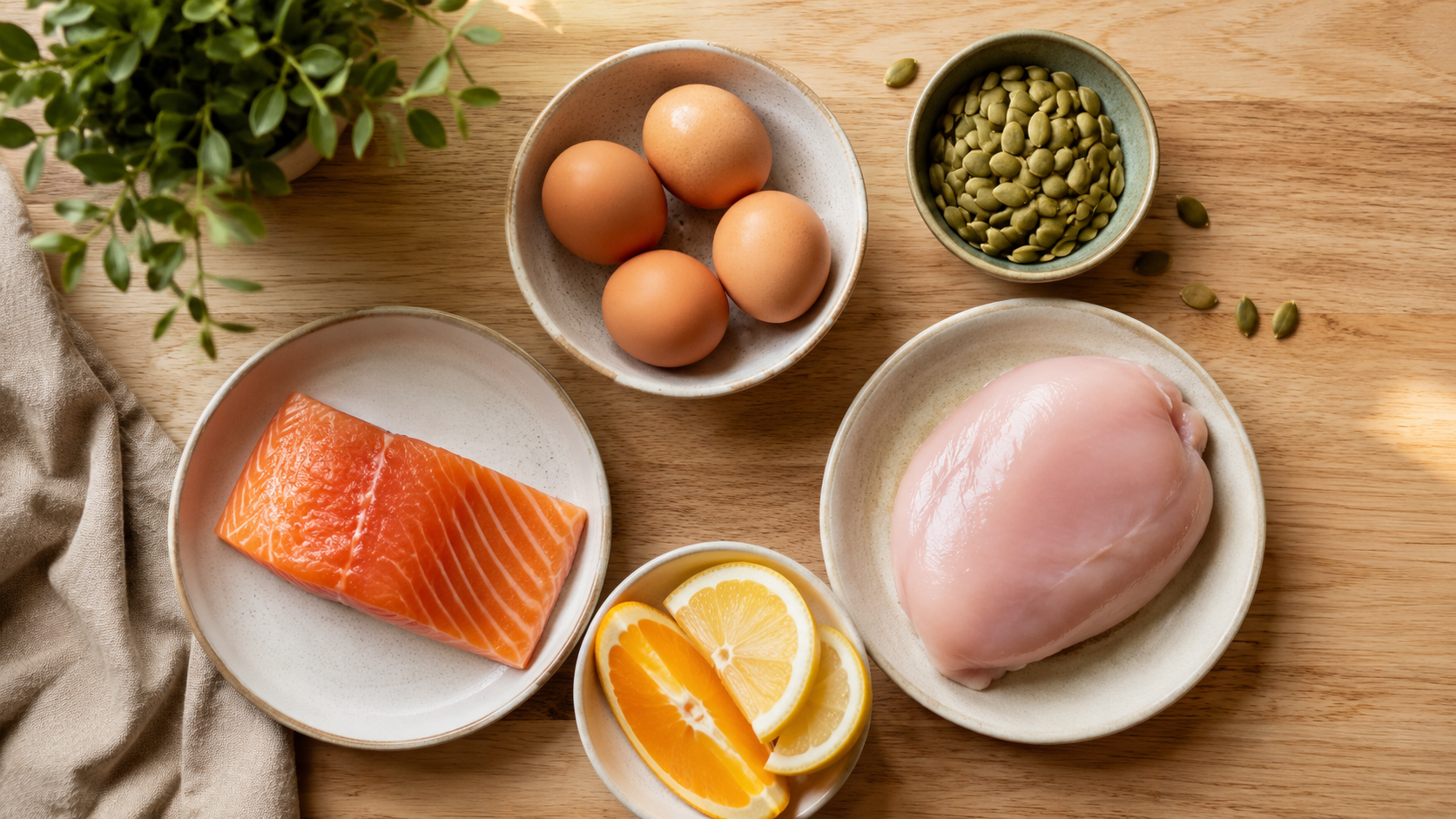
Protein supplies the amino acids needed to build new skin, blood vessels, and collagen, while zinc supports cell division and immune function during every stage of healing. Vitamin C is essential for collagen formation and helps protect healing tissue from damage. When intake of these nutrients falls short, the body can't rebuild tissue efficiently, and wounds take longer to close and are more prone to infection.
What It Looks Like
Cuts, ulcers, or surgical incisions that take significantly longer than expected to close, wounds that reopen after appearing to heal, or skin that stays red, swollen, or tender well past the usual timeline are worth paying attention to. These signs sometimes appear alongside fatigue, frequent infections, or unintended weight loss.
How to Manage It
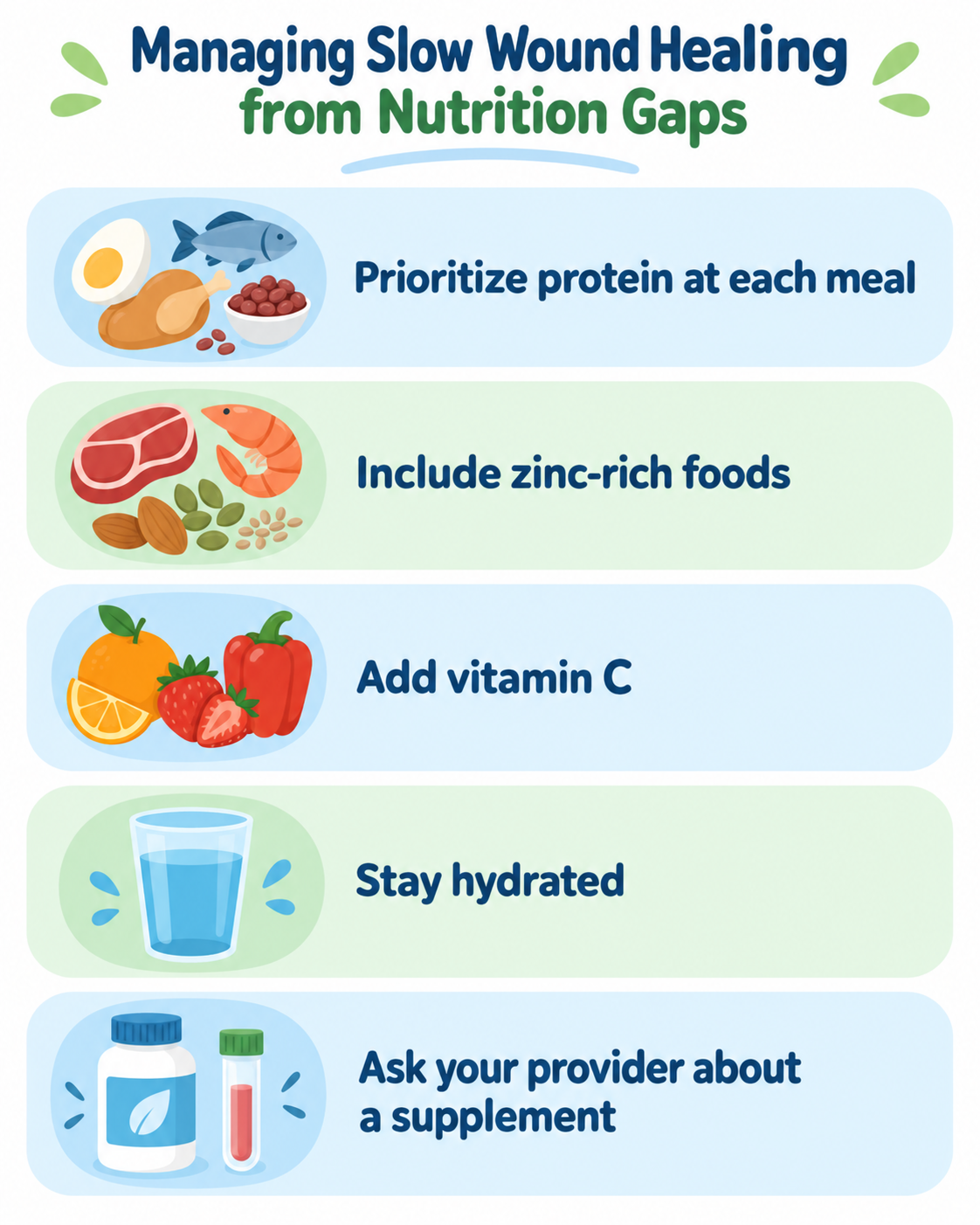
- Prioritize protein at each meal, such as eggs, fish, poultry, beans, or dairy
- Include zinc-rich foods like meat, shellfish, nuts, and seeds
- Add vitamin C sources such as citrus fruits, strawberries, and bell peppers
- Stay hydrated, since fluid supports circulation and nutrient delivery to tissue
- Talk to your provider about a supplement if you have a diagnosed deficiency or a wound that isn't improving
When to Call Your Provider
If a wound shows no improvement after two to three weeks, becomes increasingly painful, produces new drainage or odor, or is surrounded by spreading redness or warmth, reach out to your provider. These can be signs of infection or an underlying nutritional deficiency that needs to be addressed directly.
Takeaways
Wounds that heal slower than expected can be your body's way of signaling it doesn't have what it needs to repair itself. Getting enough protein, zinc, and vitamin C gives your body the raw materials it needs to rebuild tissue efficiently. If you're focused on rebuilding weight, pairing that goal with nutrient-dense foods can help ensure you're getting the specific nutrients that support healing, not just added calories. And leaning on the everyday habits dietitians swear by can make it easier to keep these nutrients consistent day after day, which matters just as much as any single meal when it comes to healing well.