You already know that tart cherries, kiwi, almonds, and fatty fish can set the stage for better sleep. But what is it about these foods that actually makes your brain wind down? The answer comes down to a handful of specific nutrients that your body uses to build its own sleep system from the inside out.

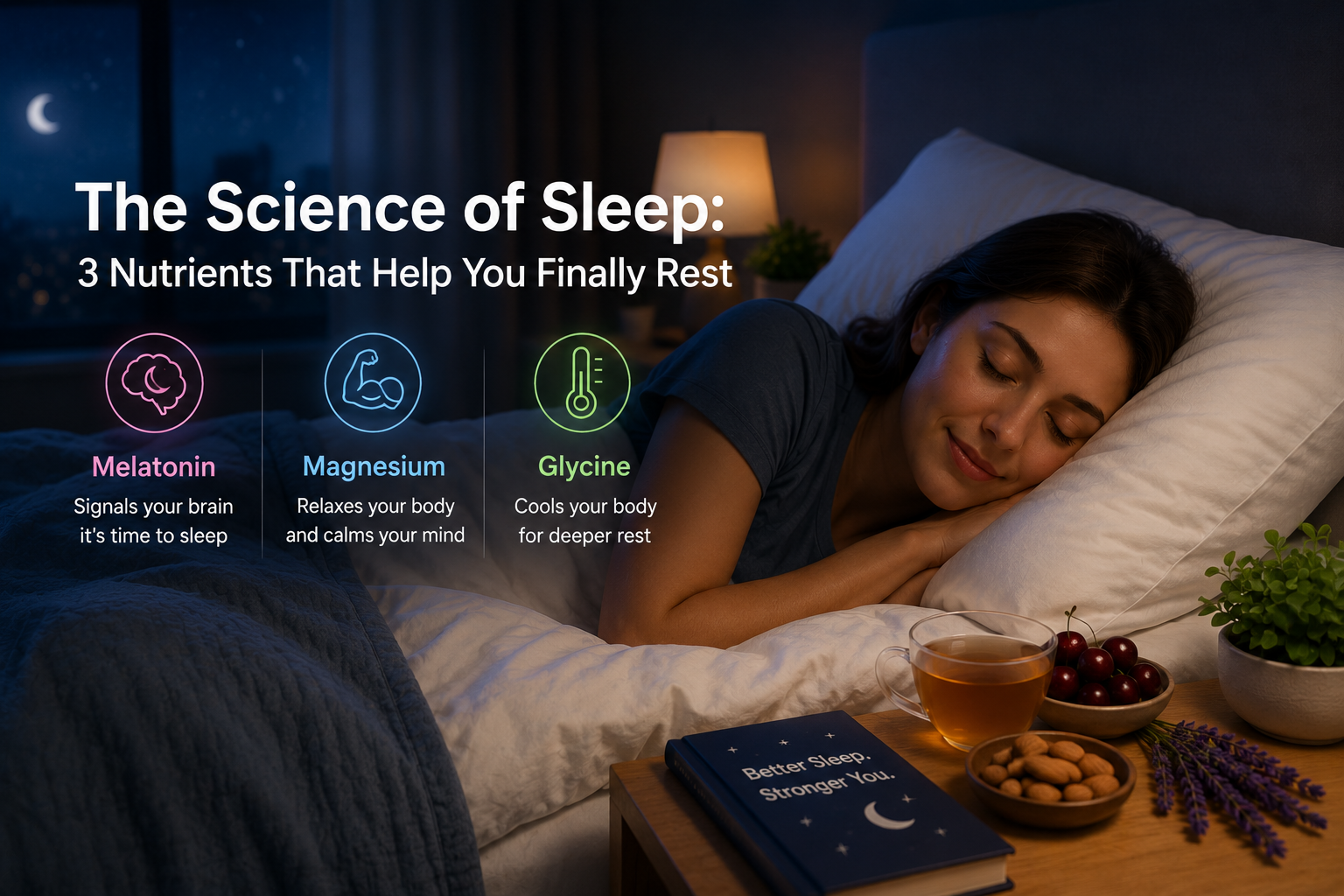
Melatonin: Your Brain's Off Switch
You've probably heard of melatonin — it's the hormone that tells your brain the day is over and it's time to sleep. Your body produces it naturally as light fades in the evening, but the process depends on having the right building blocks available.
Think of melatonin like the dimmer switch on a light. When it works properly, the lights fade gradually and smoothly. When your levels are low or your timing is off — from late-night screen exposure, irregular schedules, or poor nutrition — that dimmer gets stuck, and your brain stays lit up.
Tart cherries are one of the only foods that contain melatonin directly. But your body can also build melatonin from tryptophan — an amino acid found in turkey, dairy, eggs, and nuts — through a chain reaction that first creates serotonin, then converts it into melatonin.
Try this: Build a consistent evening snack around tryptophan-rich foods. When you finish your last task of the evening and close your laptop, that's your cue to have a small bowl of yogurt with walnuts. Same time, same routine — your brain starts to associate the snack with winding down.
Magnesium: The Muscle Whisperer
If you've ever lain in bed feeling physically tense — tight shoulders, restless legs, a jaw that won't unclench — magnesium might be what's missing. This mineral helps regulate your nervous system, calm muscle tension, and activate the parasympathetic response — your body's "rest and digest" mode.
Think of magnesium as the stage crew that dims the house lights before a show. It doesn't perform the sleep itself, but it sets the conditions that make sleep possible. Without it, your body stays on alert even when your mind is ready to rest.
Almonds, pumpkin seeds, spinach, and dark chocolate are all solid sources. Studies have shown that people with higher magnesium intake tend to fall asleep faster and experience deeper, more restorative rest.
Try this: Keep a small container of pumpkin seeds on your nightstand. When you plug in your phone for the night, eat a small handful. Phone down, seeds up — it takes ten seconds and delivers a meaningful dose of magnesium.

Glycine: The Temperature Regulator
Here's something most people don't know: your body needs to drop its core temperature slightly in order to fall asleep. Glycine, an amino acid found in bone broth, poultry skin, and gelatin-based foods, helps make that happen. It promotes blood flow to your extremities, allowing heat to leave your core — like opening a window to cool down a warm room.
Glycine also appears to improve the quality of sleep itself, helping people feel more rested and alert the next morning even without sleeping longer. It works quietly in the background, helping your brain cycle through its repair stages more efficiently.
Try this: A warm cup of bone broth in the evening is a simple way to get glycine into your routine. Habit-stack it with your existing wind-down — when you turn off the TV or start your evening routine, heat a mug. The warmth is soothing and the glycine goes to work while you sleep.
The Bigger Picture
Sleep isn't just about discipline or darkness — it's chemistry. Melatonin flips the switch, magnesium relaxes the body, and glycine cools you down for deeper rest. When you understand what your body is actually asking for, improving your sleep becomes less about willpower and more about giving your system the right tools