You've done everything right. The lights are dim, the phone is charging across the room, and you've been in bed for 45 minutes. But your brain? Still running. Still replaying the day. Still wide awake.
What if the problem started long before your head hit the pillow — at dinner, or even at lunch?
The truth is, what you eat during the day quietly sets the stage for how well you sleep at night. Certain foods contain the raw ingredients your brain needs to wind down, produce sleep hormones, and stay asleep through the night.
Your Brain Needs a Runway to Land
Sleep doesn't happen like flipping a light switch. It's more like landing a plane — your brain needs a gradual descent. That descent depends on chemicals like melatonin and serotonin, and your body builds those chemicals from nutrients in your food. Skip the right inputs, and your brain circles the runway all night.
Foods That Set the Stage for Better Sleep
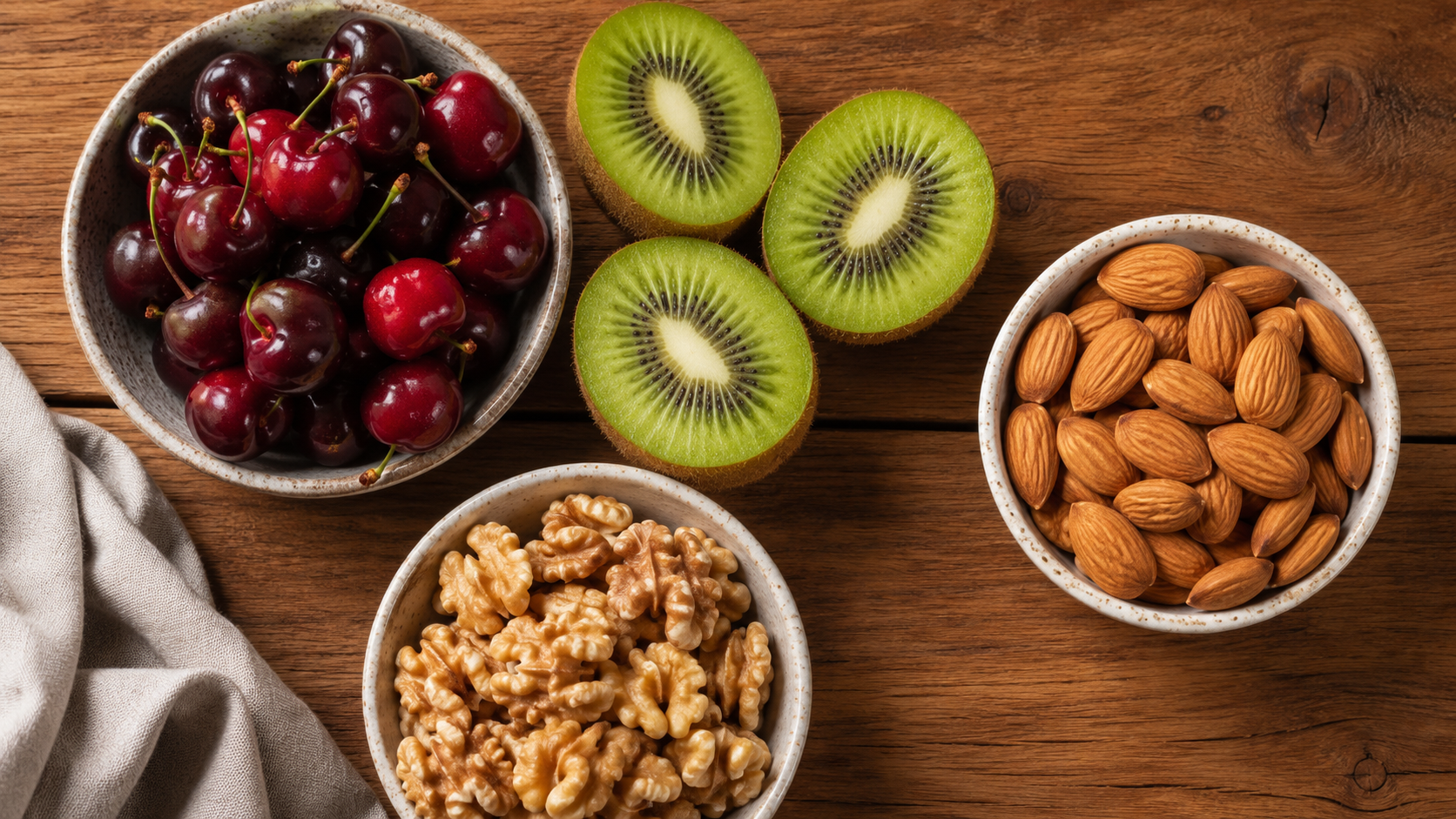
Tart cherries are one of the few natural food sources of melatonin — the hormone that tells your brain it's time to sleep. A small glass of tart cherry juice in the evening has been shown in studies to improve both sleep duration and quality.
Kiwi might seem like an unlikely sleep aid, but research suggests eating two kiwis about an hour before bed can help you fall asleep faster and stay asleep longer. They're packed with serotonin and antioxidants that support your sleep cycle.
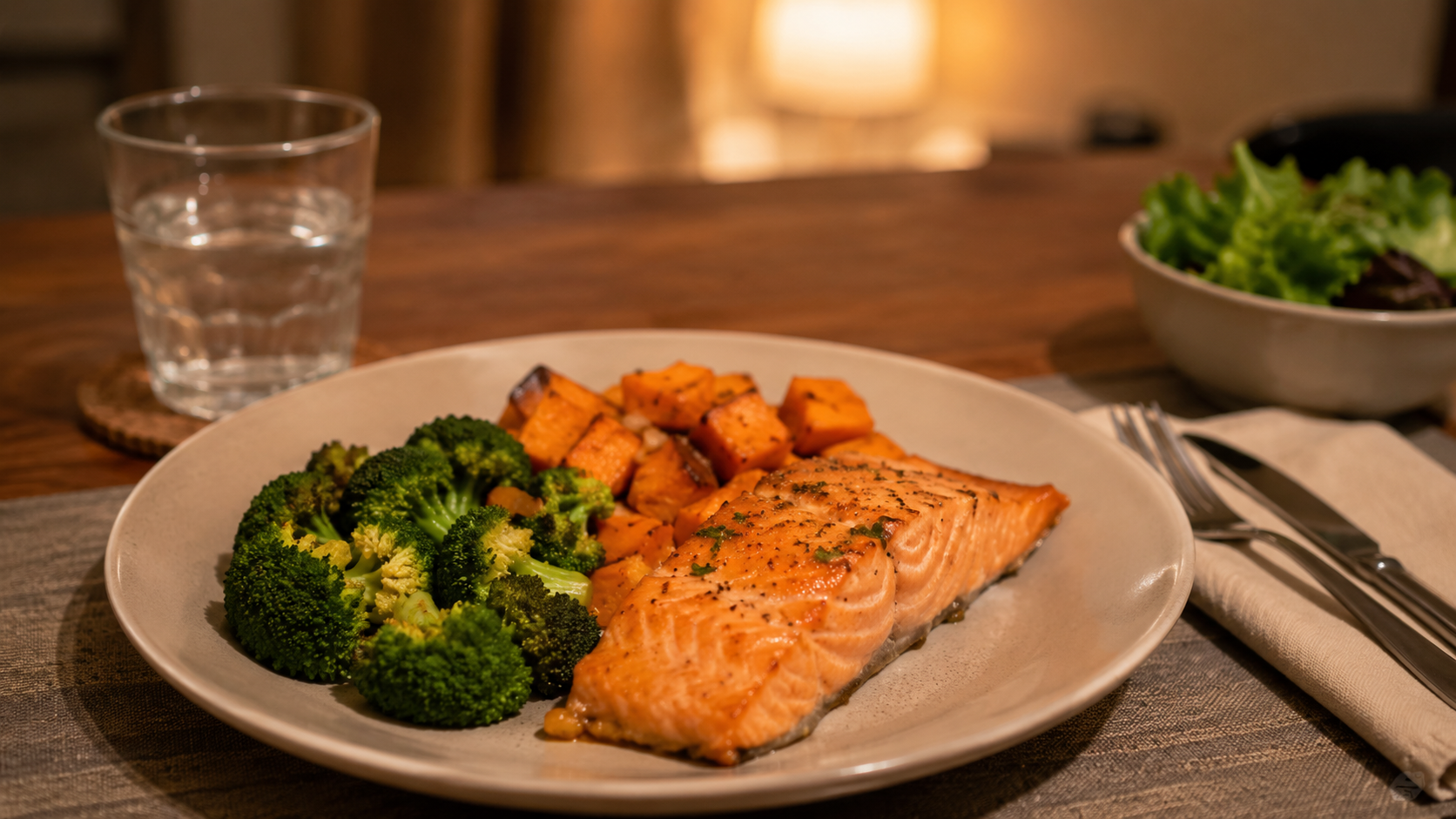
Fatty fish like salmon and mackerel deliver a one-two punch of omega-3s and vitamin D — both of which play a role in regulating serotonin production. People who eat fatty fish regularly tend to report better sleep quality overall.
Almonds and walnuts are natural sources of magnesium and melatonin. Magnesium helps relax your muscles and calm your nervous system — think of it as loosening the grip your body holds onto all day.
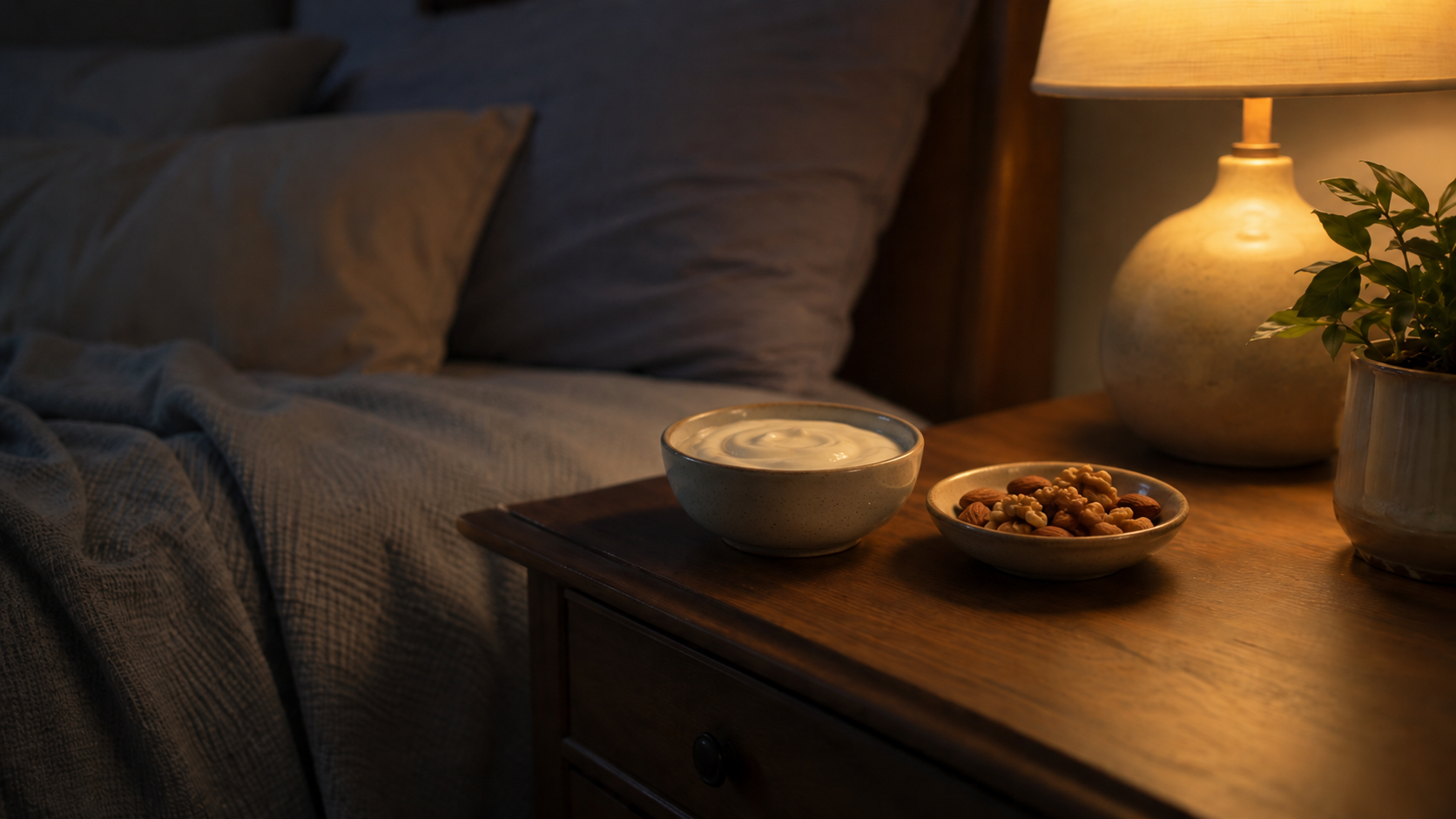
Warm milk or yogurt isn't just an old wives' tale. Dairy contains tryptophan, an amino acid your brain converts into serotonin and then melatonin. The warmth may also signal comfort and routine, which helps your brain shift gears.
What Keeps You Up
Late-night sugar and heavy, rich meals force your digestive system to work overtime — and your brain stays alert to manage it. Caffeine after mid-afternoon is an obvious culprit, but spicy foods and alcohol can also disrupt sleep architecture even if they don't keep you from falling asleep initially.
Small Habits, Better Nights
Evening habit-stack: When you start cleaning up after dinner, pour a small glass of tart cherry juice. Dinner cleanup is your cue — the juice is the new addition.
Bedtime habit-stack: When you set your alarm for the morning, eat two kiwis or grab a small handful of almonds. Setting the alarm is your cue — the snack becomes part of the ritual.
Afternoon habit-stack: When you reach for that second or third coffee, check the clock. If it's past 2 p.m., swap it for herbal tea. The craving is your cue — the swap protects tonight's sleep.
Your body wants to sleep well. Sometimes it just needs the right ingredients to get there. Start with one food, one habit, and give it a week. You might be surprised how much better your nights — and your mornings — feel.