A little dryness in the winter is normal, but skin that stays rough, flaky, or cracked no matter how much lotion you use can be your body signaling something more. Persistent dry skin is sometimes linked to gaps in essential fatty acids, zinc, or vitamin A. Understanding this connection can help you catch a deficiency before it affects more than just your skin.
Why It Happens
Your skin relies on essential fatty acids, zinc, and vitamin A to maintain its natural oil barrier, which keeps moisture in and irritants out. When your diet falls short on these nutrients, that barrier weakens, and water escapes from the skin more easily. The result is skin that feels rough, looks flaky, and struggles to stay hydrated no matter how much moisturizer you apply.
What It Looks Like
Dry, flaky skin as a sign of malnutrition often shows up as rough patches, visible flaking, or a tight, uncomfortable feeling that lotion doesn't fully relieve. It may be paired with dull hair, brittle nails, or slow-healing cuts and scrapes, since these all depend on similar nutrients. Skin that cracks, especially around the hands or heels, is worth paying closer attention to.
How to Manage It
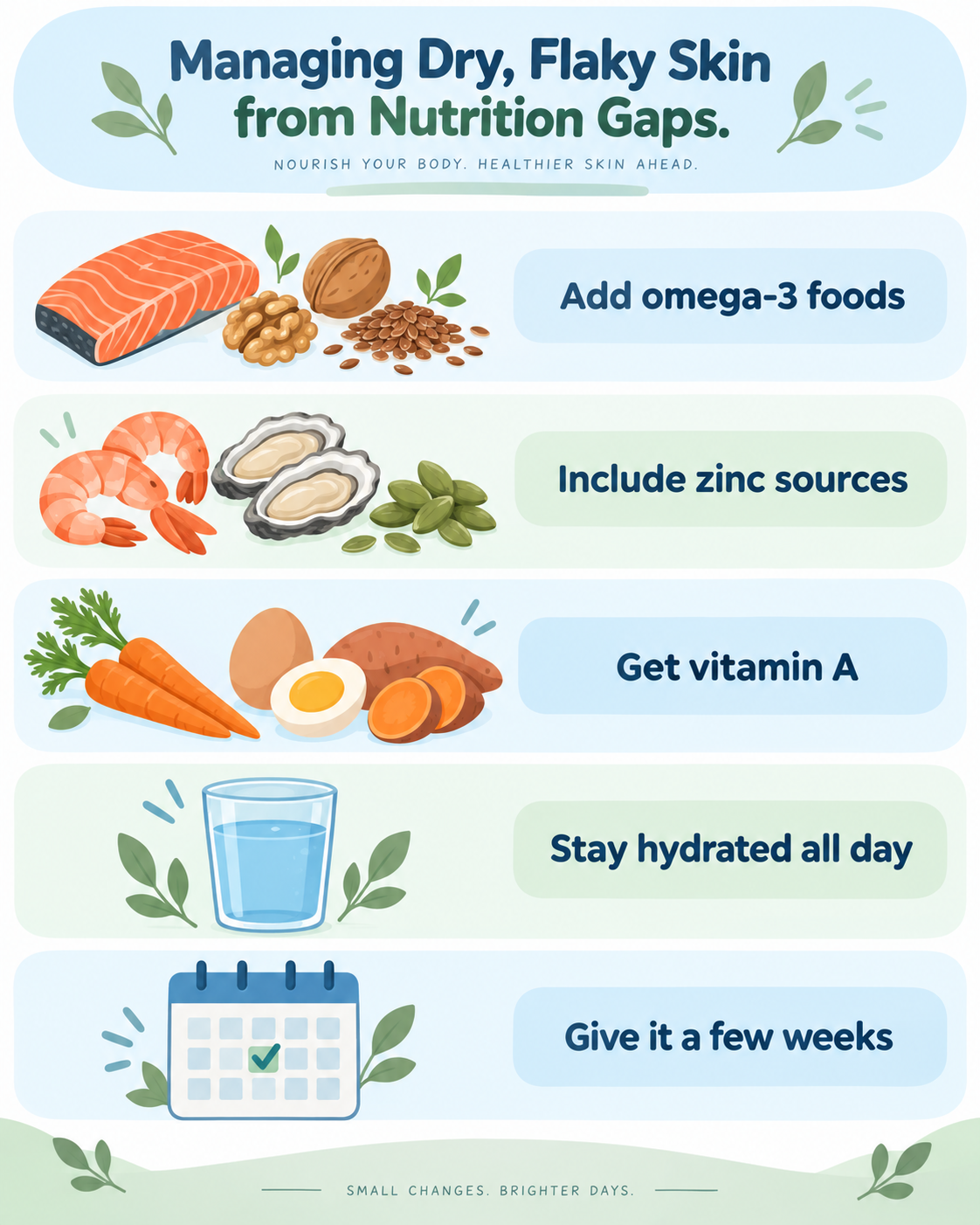
- Add omega-3-rich foods like salmon, walnuts, and flaxseed
- Include zinc sources such as meat, shellfish, and pumpkin seeds
- Eat vitamin A-rich foods like eggs, carrots, and sweet potatoes
- Stay hydrated throughout the day, not just when your skin feels dry
- Give changes a few weeks, since skin renewal takes time
When to Call Your Provider
If dryness is severe, doesn't improve with better nutrition and moisturizing, or comes with cracking, bleeding, or signs of infection, it's worth checking in with your provider. Bloodwork can help identify specific deficiencies and guide the right treatment plan.
Takeaways
Dry, flaky skin is easy to write off, but when moisturizer alone doesn't help, it can be worth looking at what's on your plate. Consistent healthy fats, zinc, and vitamin A can go a long way toward restoring your skin's natural barrier. If you're working on rebuilding weight, pairing that effort with nutrient-dense foods can help correct the deficiencies that often drive dryness in the first place. And building the everyday habits dietitians swear by, like steady hydration and balanced meals, can make it easier to stay consistent long enough to see the difference in your skin.