Feeling lightheaded once in a while is common, but dizziness that keeps coming back is worth paying attention to. It can be an early sign that your body isn't getting the nutrients it needs to keep your blood pressure, blood sugar, and circulation steady. Understanding the connection between dizziness and nutrition can help you catch the problem before it leads to falls or other complications.
Why It Happens
Dizziness often comes down to low blood pressure, low blood sugar, or anemia caused by shortfalls in iron, vitamin B12, or folate. When you're not eating enough or missing key nutrients, your body can struggle to keep blood pressure stable when you stand up, a condition called orthostatic hypotension. Dehydration, which frequently goes hand in hand with poor nutrition, makes this even more likely, especially in older adults whose thirst and hunger cues naturally become less reliable with age.

What It Looks Like
Dizziness as a sign of malnutrition often shows up as brief lightheadedness when standing up quickly, a spinning or unsteady feeling, or fatigue that accompanies the dizzy spells. It may be paired with a rapid heartbeat, pale skin, or trouble concentrating. Occasional dizziness usually isn't a concern, but frequent or worsening episodes are worth tracking.
How to Manage It
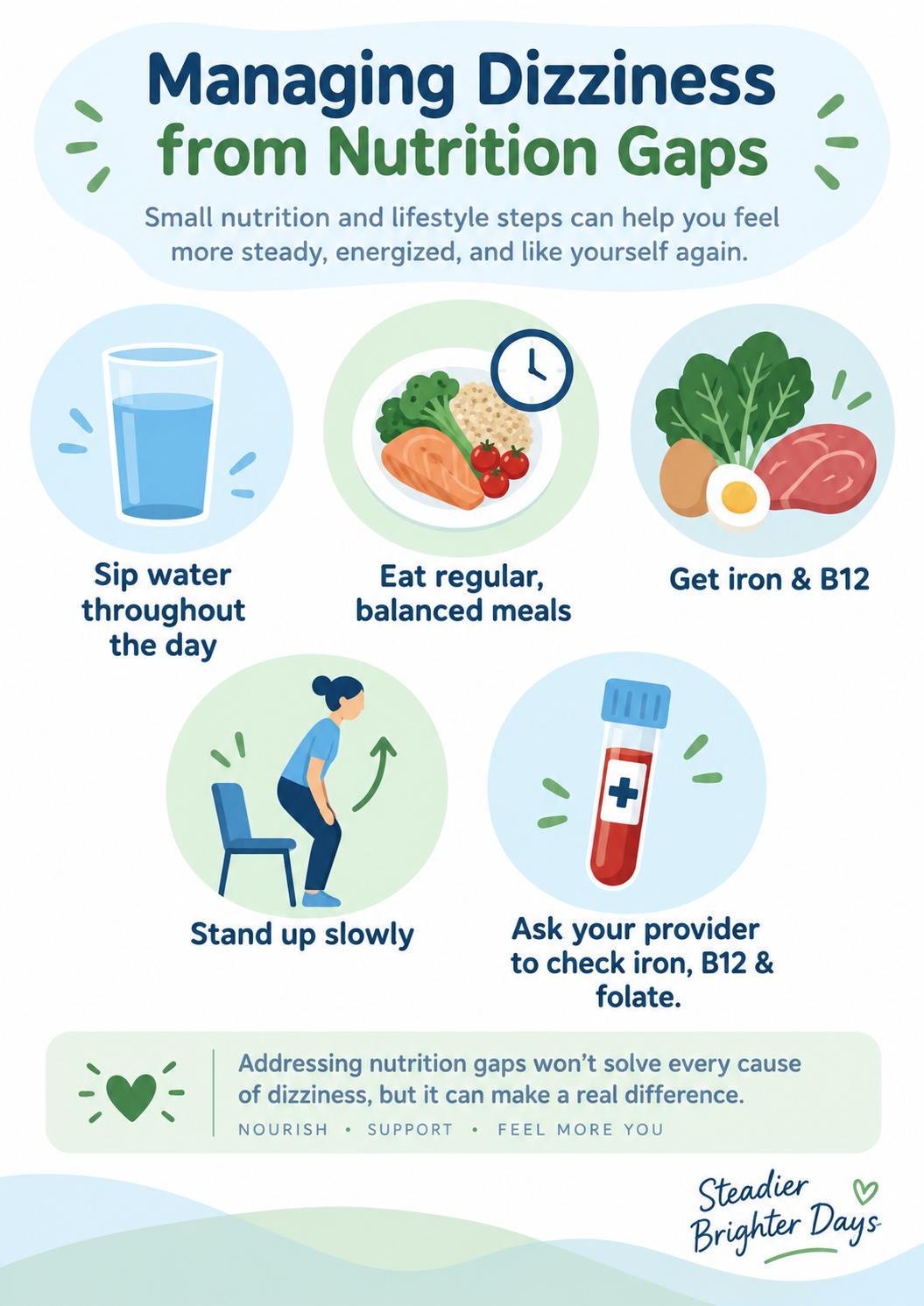
- Drink water consistently throughout the day rather than all at once
- Eat regular, balanced meals to help stabilize blood sugar
- Include iron- and B12-rich foods like lean meats, eggs, and leafy greens
- Stand up slowly from sitting or lying down to give your blood pressure time to adjust
- Ask your provider about checking your iron, B12, and folate levels if dizziness is frequent
Takeaways
Usually if you are feeling dizzy, there are several things that could be causing it, but usually it starts with what you're eating and drinking. The typical cause is dehydration, but for some people dieting or not eating well, the cause could be lack of vitamins and minerals. Talk to your dietitian or health coach to assess if what you're consuming is the cause based on your activity and health needs. Never jump to conclusions-- this dizziness could also be related to medication use or timing, or other underlying issues. But nutrition is the most common cause.