Not feeling hungry the way you used to can seem like a small thing, especially when life gets busy or stressful. But when appetite loss sticks around, it can quietly lead to malnutrition. Understanding why your appetite has changed can help you protect your nutrition before the effects add up.
Why It Happens
Appetite is controlled by a mix of hormones, digestion, mood, and habit, so it can be thrown off by many things, including illness, medications, depression, chronic pain, or simply eating alone. When you consistently eat less than your body needs, it can lower hunger signals even further, creating a cycle that's hard to break without some intervention. Older adults are especially prone to this pattern, sometimes called the anorexia of aging, where taste, smell, and hunger cues naturally fade over time.

What It Looks Like
Loss of appetite as a sign of malnutrition often shows up as skipping meals, feeling full after just a few bites, or losing interest in foods you used to enjoy. It may come with fatigue, unintentional weight loss, or a general sense of low energy. Because appetite naturally fluctuates, it's worth paying attention when the change is persistent or paired with these other signs.
How to Manage It
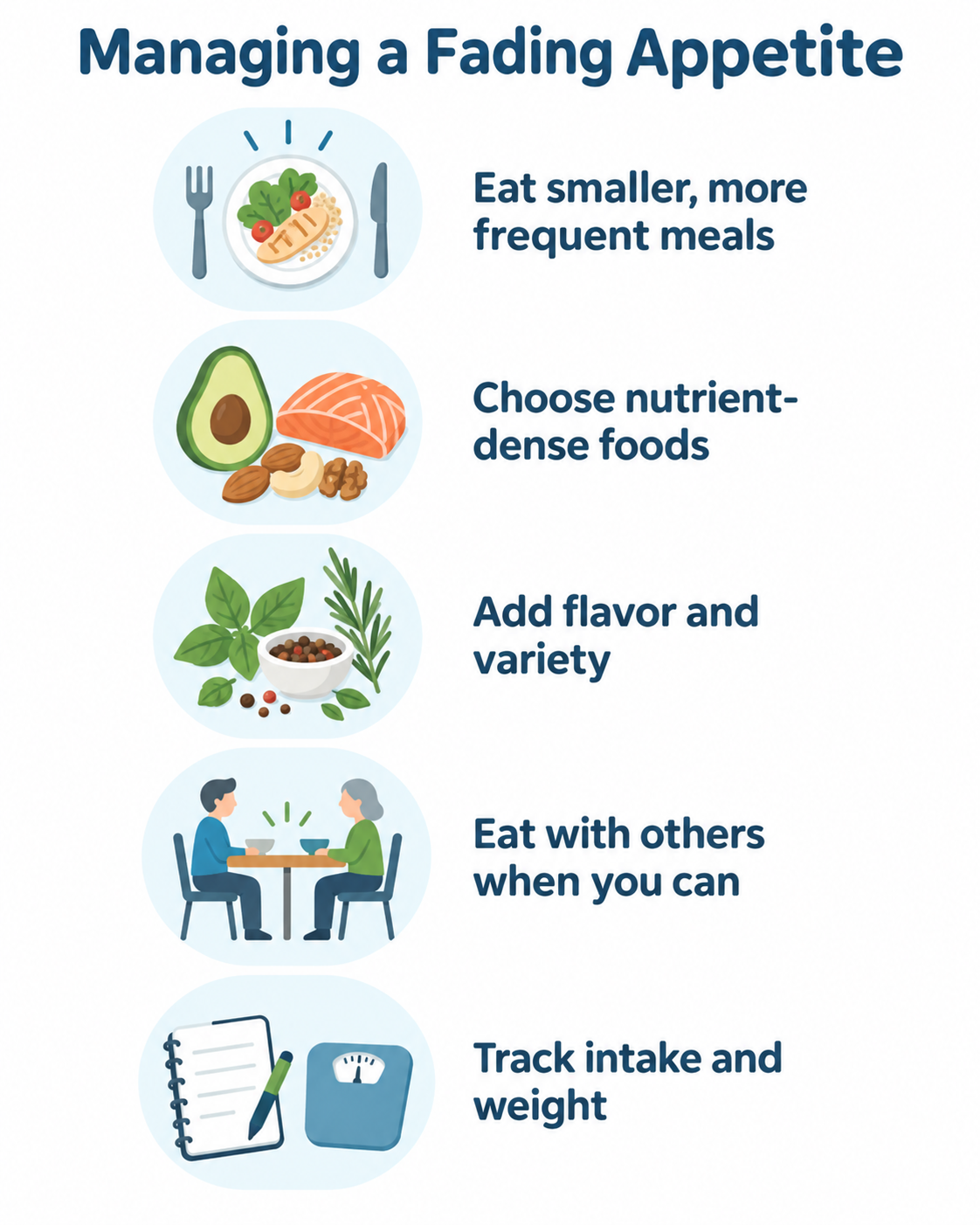
- Eat smaller, more frequent meals instead of forcing three large ones
- Choose nutrient-dense foods so fewer bites cover more nutritional ground
- Add flavor and variety to make meals more appealing
- Eat with others when possible, since social meals can boost intake
- Track your intake and weight to catch changes early
When to Call Your Provider
If appetite loss lasts more than a couple of weeks, comes with unintended weight loss, or leaves you feeling weak or unwell, it's worth looping in your care team. They can check for underlying causes like medication side effects, depression, or a digestive issue, and help you find a plan that restores both appetite and nutrition.
Takeaways
A fading appetite deserves attention rather than dismissal, since it can quietly tip you toward malnutrition over time. Small, consistent steps, like eating on a schedule and choosing foods that pack in nutrition, can make eating feel more manageable again. If you're focused on rebuilding weight, starting with small, frequent portions of nutrient-dense foods can ease you back into consistent eating without feeling overwhelmed. And the everyday habits dietitians swear by can help turn eating from a chore into something more sustainable as your appetite recovers.