Managing blood sugar starts with balanced meals. In this section, you’ll learn how to use the portioned plate and why the quality and quantity of carbs can make a big difference.
The Portioned Plate
The portioned plate approach makes it easy to decide how much of each type of food to include. Use a 9-inch plate and fill it like this:
- Half your plate: Non-starchy vegetables, such as broccoli, spinach, and bell peppers.
- One-quarter: Healthy carbohydrates such as whole grains (brown rice, quinoa, whole-wheat bread), starchy vegetables (potatoes, corn), or legumes (lentils, chickpeas).
- One-quarter: Lean proteins like chicken, turkey, fish, eggs, tofu, beans, or low-fat dairy (such as yogurt or cottage cheese).
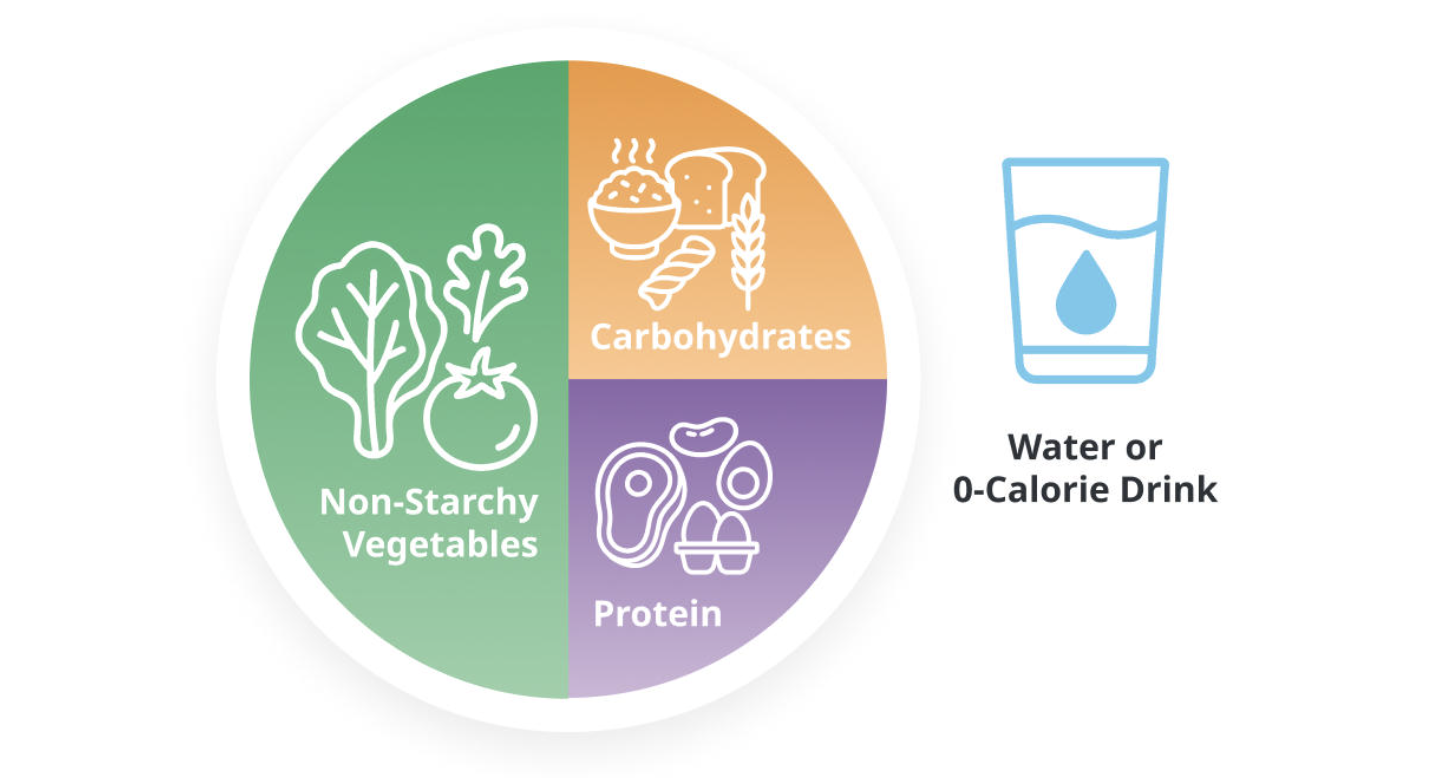
Following this helps you get a variety of nutrients in the right amounts. Think of each part as a puzzle piece that fits together to support your overall health.
The Quality and Quantity of Carbs
Research has shown that nutrition therapy can lower A1C by up to 2% in people with type 2 diabetes in as little as 3 months¹.
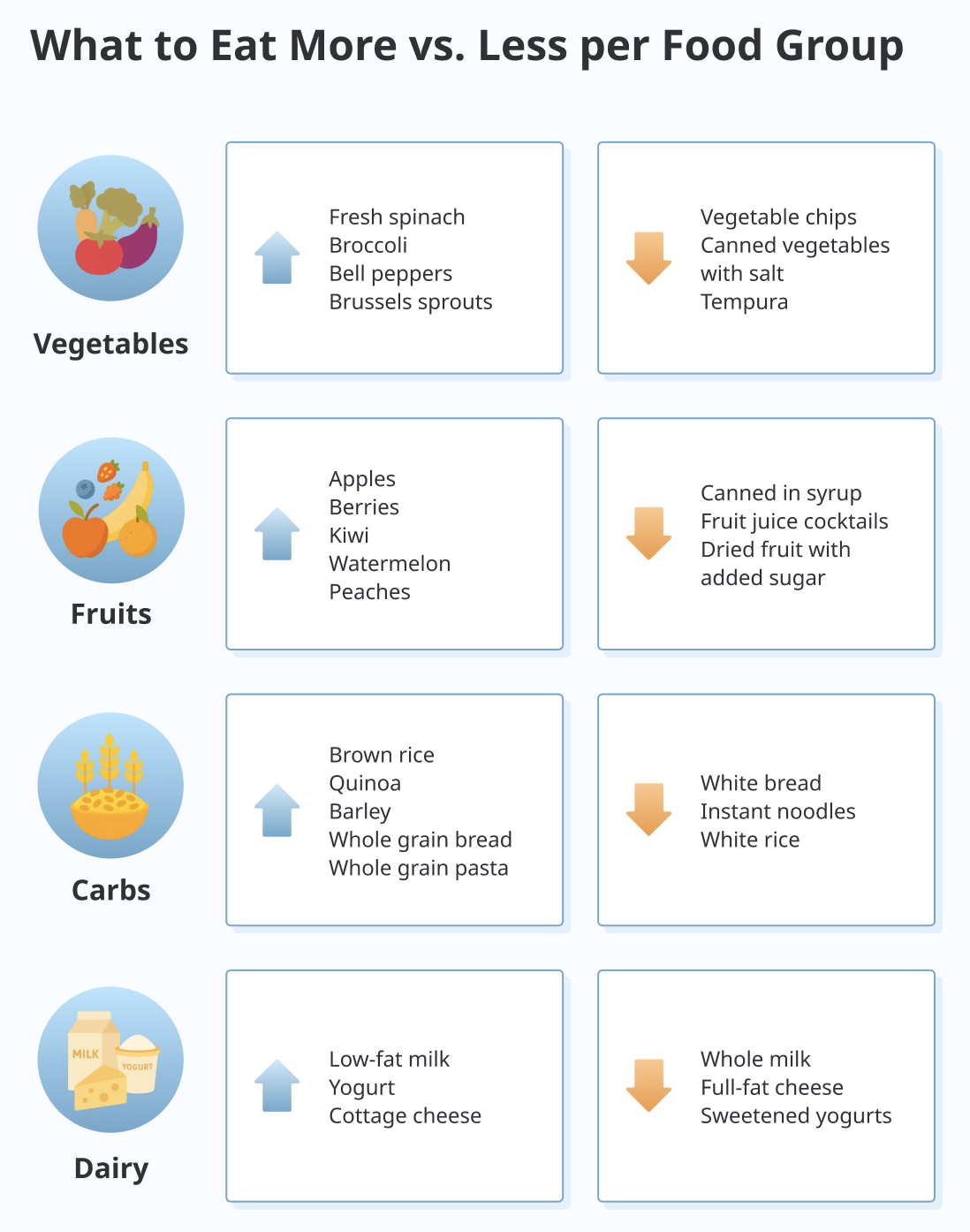
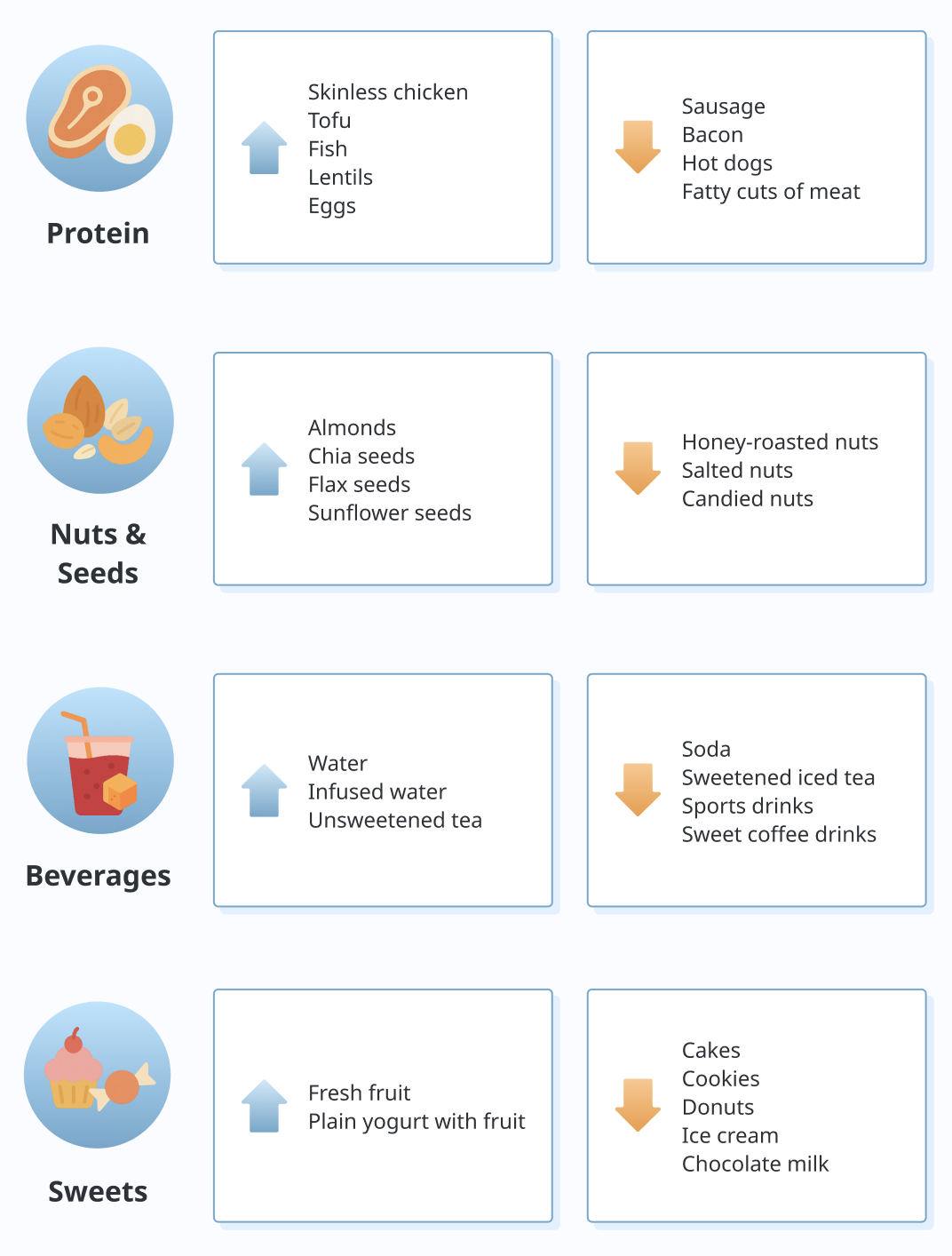
Both the quality and quantity of carbs can make a big difference in managing your blood sugar. Use the table below to learn how to make smarter choices.

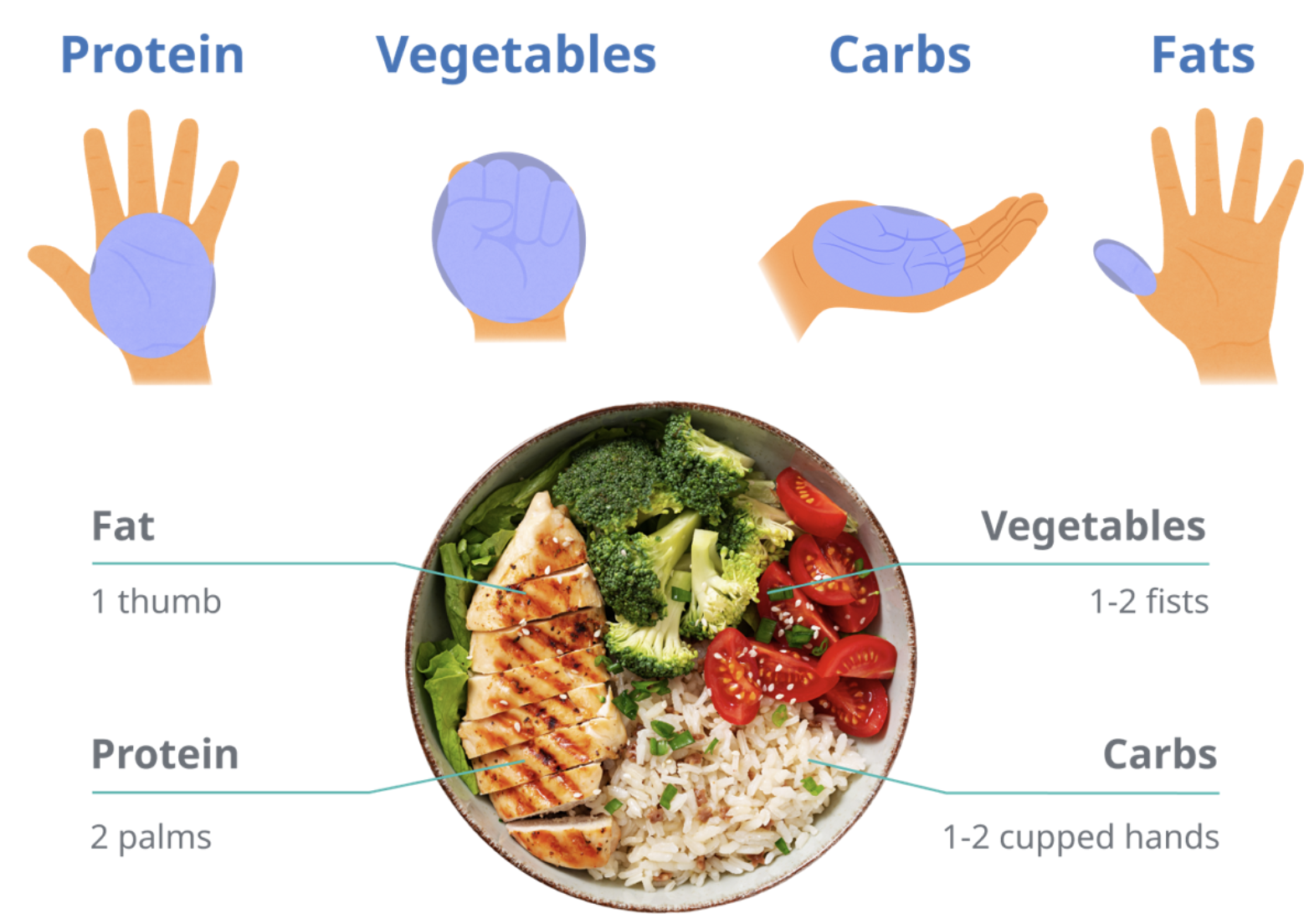
🤚 Hand Guide to Portion Sizes
Now that you know what kinds of foods to eat and that how much you eat matters too, it’s time to talk about portion sizes. A simple way to measure is by using your hand. It’s always with you and gives you a quick way to estimate how much to eat without needing measuring cups or a scale. The picture below shows how much to aim for at each meal, based on a 2,000-calorie plan.
References:
- Briggs Early, K., & Stanley, K. (2018). Position of the Academy of Nutrition and Dietetics: The role of medical nutrition therapy and registered dietitian nutritionists in the prevention and treatment of prediabetes and type 2 diabetes. Journal of the Academy of Nutrition and Dietetics, 118(2), 343–353. https://doi.org/10.1016/j.jand.2017.11.021